Maxime
1958
No user ratings available yet
Representation score: 2.5 out of 10
Representation Score
Minimal
1954
ApprovedDirector
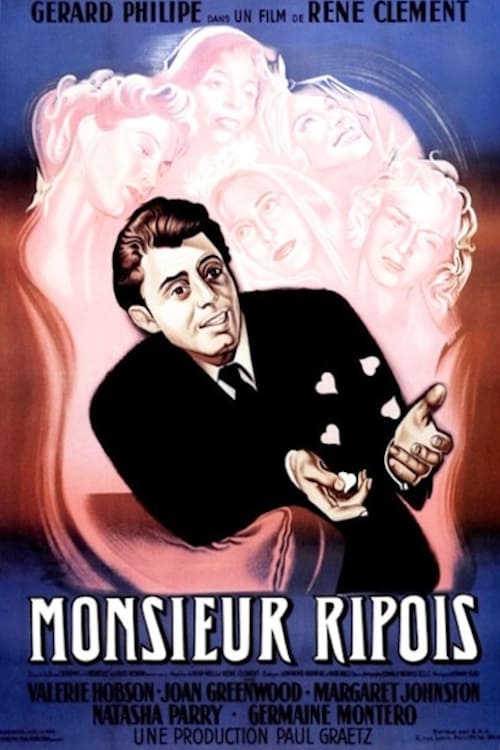
René Clément
Runtime
100 minutes
Average Rating
No ratings yetNew Showbiz Analysis
Monsieur Ripois is a traditional psychological drama that emphasizes individual character study over exploring diverse identities. It reflects the social norms of 1950s France, focusing on personal morality and individual experiences. The narrative structure centers on mid-century social dynamics, highlighting the duality of human nature and morality. It does not challenge traditional hierarchies or address systemic identity issues. Overall, the film is a period piece centered on the male experience, offering limited representation for underrepresented groups or diverse social identities.
Category Breakdown
The film focuses solely on heterosexual relationships and does not include any characters with non-traditional sexual orientations or gender identities.
Women such as Catherine and Patricia play secondary roles, revolving around the male protagonist. The story lacks women's ability to drive the story, focusing instead on André's infidelity and personal struggles.
Set in mid-20th century France, the film features a homogeneous cast with no racial or ethnic diversity.
The story is a psychological character study that does not critique institutions. It maintains conventional social portrayals without an anti-establishment stance.
There are no characters with visible or invisible disabilities, nor any neurodivergent representation in the narrative.
Present on Screen
Limited or Absent
Official Synopsis
While his wife, Catherine, is finalizing their divorce, serial philanderer Andre invites his latest conquest, Catherine’s best friend, Patricia, over for dinner. Over the course of the evening, Andre shares his entire romantic history since first coming to London as a young man, including his liaisons with his former boss, a marriage-minded young girl and a kindhearted Frenchwoman.
1958

1950

1969

1939
1964

1939

1977
1960
No reviews yet. Be the first to share your thoughts on this movie!
Use the rating form above to leave a star rating and optional review.