
Movement Studies in Paris
1928
No user ratings available yet
Representation score: 2.1 out of 10
Representation Score
Limited
1928
Director
André Sauvage
Runtime
80 minutes
Average Rating
No ratings yetNew Showbiz Analysis
André Sauvage’s work functions as a rhythmic, sociological portrait of Paris rather than a character-driven narrative. By focusing on the movement of crowds and the city's changing rhythms, the film avoids traditional storytelling but also misses opportunities for deep identity exploration. The documentary captures the complexity of a metropolitan capital during the Belle Époque. However, the observational nature of the era means that diverse populations and specific identities often appear as incidental parts of the urban landscape rather than central subjects. Ultimately, the film's strength lies in its deconstruction of the monumental city. It trades didactic storytelling for a fluid study of human movement, though it does not intentionally center multi-layered or progressive social critiques.
Category Breakdown
The film focuses on urban mobility and does not provide explicit narrative arcs or dialogue related to LGBTQ+ identities. While it explores the margins of society through furtive inhabitants, there is no clear depiction of specific LGBTQ+ individuals.
The documentary emphasizes the architecture and rhythms of the city over individual character studies. Women appear within the urban fabric, but the film does not delve into gendered ability to act or the subversion of hierarchical structures.
The film captures various neighborhoods during a period of colonial expansion. While diverse populations are likely present, the score reflects the incidental nature of these depictions within a 1928 metropolitan context.
Sauvage disrupts monumentalist filmmaking by focusing on the changing rhythms of urban life. This approach offers a subjective, sensory appreciation of the city rather than a curated or institutionalized view.
The observational, montage-heavy style focuses on collective movement. There is no discernible evidence regarding the portrayal of neurodivergence or physical disabilities within this study of urban mobility.
Present on Screen
Limited or Absent
Official Synopsis
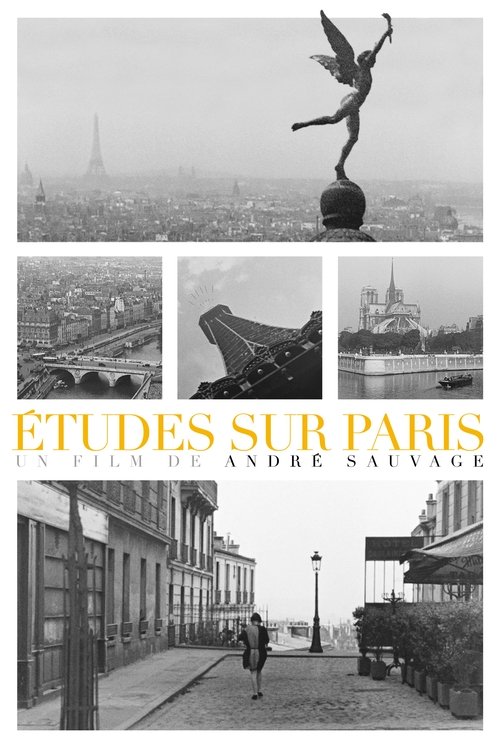
"Paris, Paris, you know, I would eat it..." wrote André Sauvage. An artist close to the avant-gardes, André Sauvage composed the first great filmed portrait of Paris. Its ambitious symphony of a big city marries, on the music composed by Jeff Mills, the changing rhythm of the Belle Époque. Contemporary of the dizzying explorations of Dziga Vertov and Walter Ruttmann, Sauvage is less fascinated by speed than by the repertoire of urban mobility, attentive to the neighborhoods he crosses, always curious about their furtive inhabitants. He draws a portrait of Paris in five studies: Paris-Port, North-South, the islands of Paris, the Little Belt and from the Saint-Jacques tower to the Sainte-Geneviève mountain.
1928

1927
1921
1929
1896
1897
1929
1929
No reviews yet. Be the first to share your thoughts on this movie!
Use the rating form above to leave a star rating and optional review.