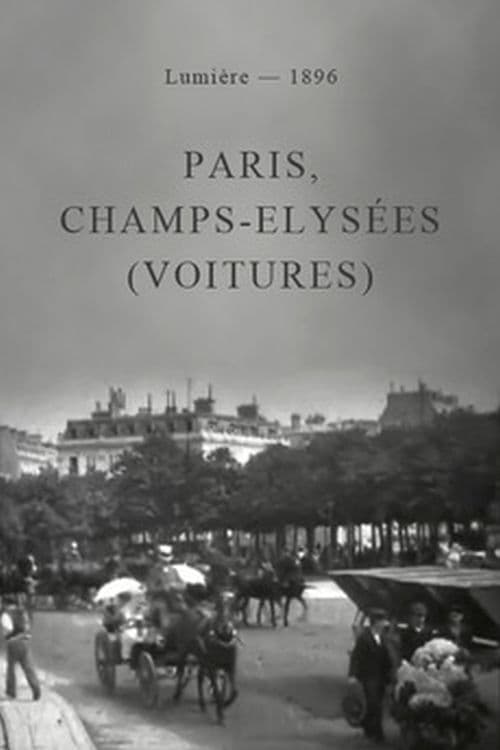
Paris, Champs-Elysées (voitures)
1896
No user ratings available yet
Representation score: 0.2 out of 10
Representation Score
Minimal
1896
Director
Auguste Lumière, Louis Lumière
Runtime
1 minutes
Average Rating
No ratings yetNew Showbiz Analysis
As a foundational work of the actualité genre, Champs-Élysées functions as a historical snapshot rather than a narrative film. It captures a candid cross-section of late 19th-century Parisian life through unmediated observation. Because the film is strictly observational, it lacks the complexity required for intentional representation. It reflects the demographic and social constraints of its time without attempting to disrupt or reframe existing hierarchies. The footage serves as a record of a specific Western urban center, showing a homogeneous crowd that adheres to the social norms of 1896 France.
Category Breakdown
The film is a brief, non-narrative documentary capturing a street scene. There is no evidence of LGBTQ+ characters or narratives addressing sexual orientation.
Women are visible among the crowd of Parisian pedestrians. However, the film lacks the structure to establish women's roles or challenge traditional gender norms.
The pedestrians appear largely homogeneous, reflecting the demographic composition of 1896 Paris. There is no evidence of intentional racial diversity in the footage.
The film serves as a document of Western urbanity and traditional social structures. It presents an uncritical view of contemporary Parisian life, reinforcing the period's social norms.
There is no discernible depiction of individuals with physical or neurodivergent disabilities. The pedestrians represent a standard range of mobility for the era.
Present on Screen
Limited or Absent
Official Synopsis
Children play near a pile of sand under the watchful eye of a woman while passers-by, cabs and carriages parade along the Avenue des Champs-Élysées.
1896

1927
1897

1929

1896
1897

1896
1897
No reviews yet. Be the first to share your thoughts on this movie!
Use the rating form above to leave a star rating and optional review.