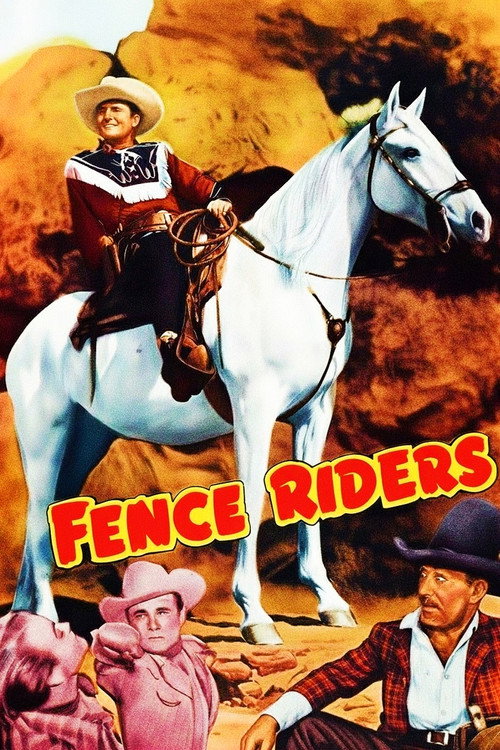
Fence Riders
1950
No user ratings available yet
Representation score: 1.2 out of 10
Representation Score
Minimal
1951
ApprovedDirector
Norman Sheldon, H.W. Kier
Runtime
59 minutes
Average Rating
No ratings yetNew Showbiz Analysis
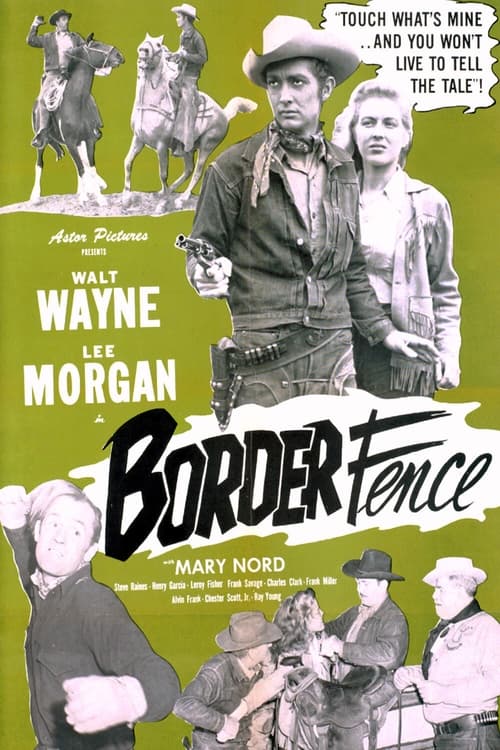
Border Fence is a product of its time, adhering strictly to the low-budget Western clichés of the early 1950s. The narrative centers on a narrow conflict between male protagonists and antagonists, offering little room for diverse perspectives or complex social identities. The film reinforces traditional hierarchies and moral binaries. By focusing on standard archetypes of law enforcement and outlawry, it avoids any meaningful exploration of overlapping social identities or cultural relativism. Ultimately, the film serves as a conventional genre piece that prioritizes established social norms over demographic variety or narrative subversion.
Category Breakdown
The film does not include any depictions of LGBTQ+ identities or same-sex relationships. The story revolves around traditional Western characters that exclude queer narratives.
Women in the film have limited roles and appear to lack ability to act within a male-dominated storyline. The plot is driven by male characters, both law-abiding citizens and outlaws.
The film likely reflects the era's homogeneous casting practices. There is no indication of a multi-ethnic cast or the subversion of Anglo-Saxon dominance.
The narrative adheres to traditional moral binaries between law-abiding citizens and outlaws. It upholds conventional Western institutional values without exploring systemic critiques.
There is no information about the inclusion of characters with physical or neurodivergent disabilities.
Present on Screen
Limited or Absent
Official Synopsis
Produced in Arizona, this very low-budget Western starred Walter Wayne as a law-abiding citizen helping to get his neighbor (Steve Raines) out of the hoosegow. The latter, however, repays the gesture by giving shelter to Lee Morgan and his gang of rustlers.
1950
1939
1946
1958
1946
1946
1944
1945
No reviews yet. Be the first to share your thoughts on this movie!
Use the rating form above to leave a star rating and optional review.