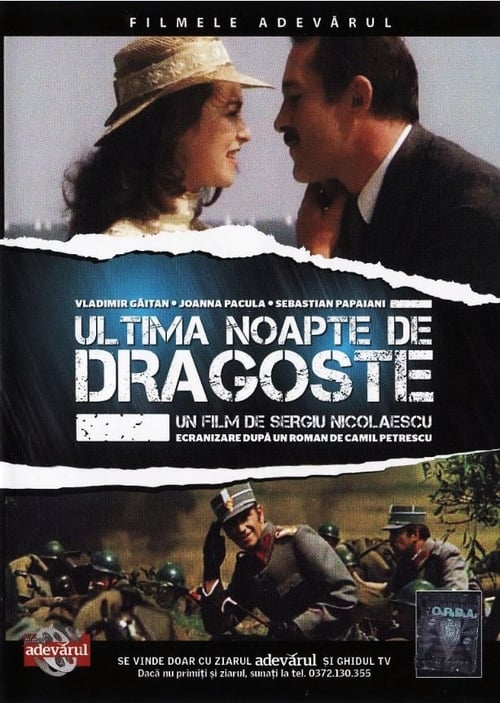
Last Night of Love
1980
No user ratings available yet
Diversity score: 3.0 out of 10

1936
ApprovedDirector
Nicolas Farkas
Runtime
83 minutes
Average Rating
No ratings yetSynopsis
French-language version of Port Arthur (1936), a German language film (q.v.) co-produced by German, French and Czechoslovakian film interests. About espionage, action and romance in the Russo-Japanese War, as the conflict threatens Russian naval officer Boris Ranewsky and his Japanese wife Youki.
Overall Score
Fair
Category Breakdown
LGBTQ+ Representation
The story focuses on a heterosexual romance between a Russian officer and his Japanese wife. No queer subtext or non-cisnormative identities are present in the narrative.
Gender Representation
The plot centers on a male protagonist navigating war and espionage. While Youki is a central figure, she is primarily defined by her relationship to the male lead.
Racial & Ethnic Diversity
The film features a cross-cultural marriage between a Russian and a Japanese national. This depiction of a blended identity disrupts the homogeneous casting common in 1936 cinema.
Religious & Cultural Diversity
Themes of espionage and naval warfare lean toward traditionalist structures of duty. The narrative lacks specific secularist or anti-capitalist critiques to expand its cultural scope.
Disability Representation
There are no visible or invisible disabilities documented within the primary character arcs.
Strengths
Areas for Improvement
AI Analysis
Port Arthur (1936) serves as a moderate example of mid-century internationalist storytelling. Its most significant contribution is the depiction of cross-cultural intimacy, which challenges the era's standard for homogeneous casting through its central interracial marriage. However, the film remains tethered to the traditional dramatic structures of the 1930s war genre. The narrative architecture relies heavily on gendered roles and geopolitical tensions that favor conventional tropes over progressive subversion. Ultimately, while the film offers a window into internationalist romance, it lacks the depth of representation required to move beyond the standard period drama framework.
1980

1991

2001

1927

1983
1943
1950
1928
1966

1967
1964

2016
No reviews yet. Be the first to share your thoughts on this movie!
Use the rating form above to leave a star rating and optional review.