The Peach Thief
1964
No user ratings available yet
Representation score: 5.0 out of 10
Representation Score
Limited
1980
Director
Sergiu Nicolaescu
Runtime
100 minutes
Average Rating
No ratings yetNew Showbiz Analysis
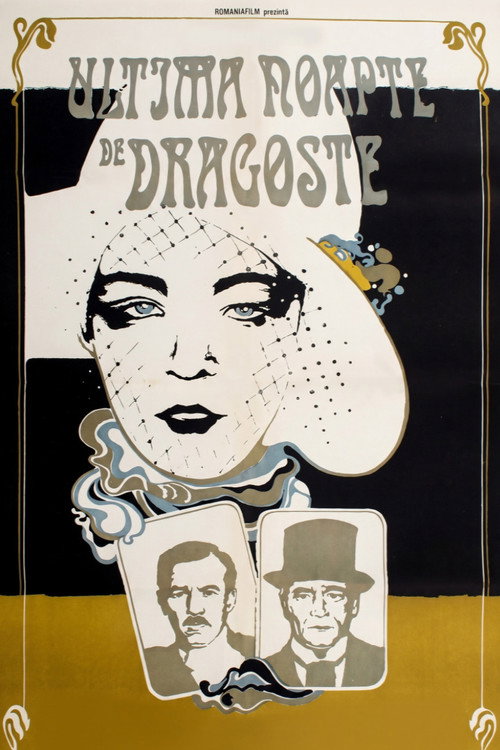
Last Night of Love is a period war drama that uses the geopolitical tension of 1916 to frame a domestic melodrama. The story prioritizes classical themes of infidelity and romantic instability over diverse identity exploration. The film adheres to traditional social and gender hierarchies. women's ability to drive the story is limited, as the protagonist serves primarily as a focal point for male competition and jealousy. While historically grounded in the Romanian experience, the film lacks engagement with multi-layered or progressive frameworks, focusing instead on established nationalist and romantic clichés.
Category Breakdown
The film centers on a relationship conflict between a married couple and a male rival. The plot revolves around traditional jealousy and lust.
Lena is portrayed as an object in a competition between two men. This structure emphasizes male desires and reinforces traditional gender roles.
The story focuses on Romanian national identity and military experiences. It reflects the demographic homogeneity typical of a regional period drama.
The narrative relies on traditional social hierarchies such as military rank and family units. It follows Western dramatic structures centered on individual passions.
There is no mention of characters with visible or invisible disabilities in the narrative.
Present on Screen
Limited or Absent
Official Synopsis
In 1916, shortly before Romania's entry in World War One Romanian Army Lieutenant Tudor Gheorghiu is posted to a border patrol unit on Romania's border with Austria-Hungary. Not receiving any news from his wife he persuades the commanding officer, Captain Dimiu, to allow him a short leave to visit his wife. Tudor married Lena two years before but was very jealous and suspected her of infidelity. When his grandfather dies Tudor inherits most of the fortune. Gigolo lawyer Andrei Nicolau is the executor of the will. He also is the man who lustfully desires Tudor's beautiful wife. A contest for Lena's love begins. Romania is plunged into WW1 and ironically Tudor receives his junior Lieutenant commission in the same regiment where gigolo lawyer Nicolau serves as a Major. Their destinies seem intertwined.
1964
1954

1927
1974
1935
1993
2009
1962
No reviews yet. Be the first to share your thoughts on this movie!
Use the rating form above to leave a star rating and optional review.