
WUSA
1970
No user ratings available yet
Diversity score: 4.8 out of 10
1968
Director
Peter Brook
Runtime
118 minutes
Average Rating
No ratings yetSynopsis
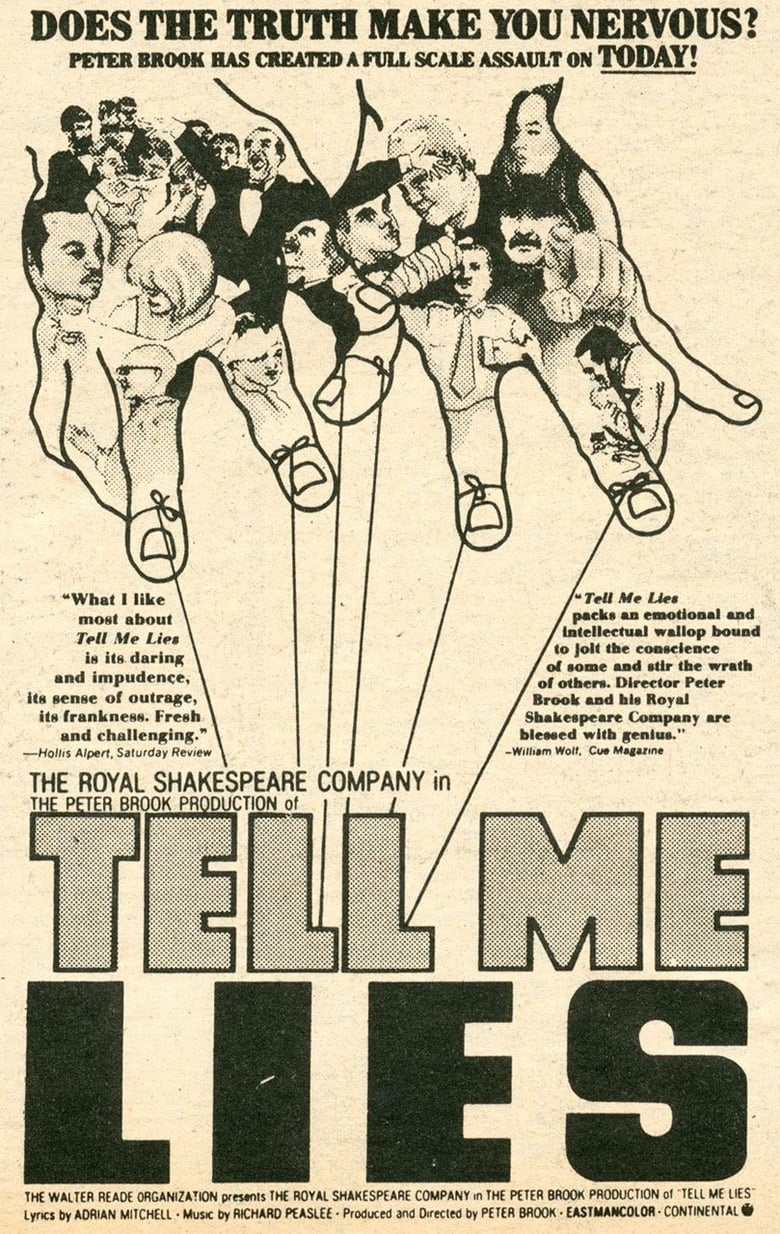
Adapted and directed by Peter Brook from the Royal Shakespeare Company’s ‘production-in-progress US’, this long-unseen agitprop drama-doc – shot in London in 1967 and released only briefly in the UK and New York at the height of the Vietnam War – remains both thought-provoking and disturbing. A theatrical and cinematic social comment on US intervention in Vietnam, Brook’s film also reveals a 1960s London where art, theatre and political protest actively collude and where a young Glenda Jackson and RSC icons such as Peggy Ashcroft and Paul Scofield feature prominently on the front line. Multi-layered scenarios staged by Brook combine with newsreel footage, demonstrations, satirical songs and skits to illustrate the intensity of anti-war opinion within London’s artistic and intellectual community.
Overall Score
Fair
Category Breakdown
LGBTQ+ Representation
The film prioritizes political protest and theatrical performance over the exploration of non-cisnormative identities. There is no evidence of explicit LGBTQ+ character arcs or depictions of same-sex intimacy within the narrative.
Gender Representation
Prominent female figures like Glenda Jackson and Peggy Ashcroft are positioned at the front line of the artistic movement. The film grants women significant intellectual and performative agency amidst political upheaval.
Racial & Ethnic Diversity
The setting focuses on the London artistic and intellectual community of the late 1960s. The cast reflects the predominantly Anglo-Saxon demographic of the UK's theatrical elite during this era.
Religious & Cultural Diversity
The film excels in critiquing established power structures and Western geopolitical hegemony. It uses an agitprop framework to scrutinize state and military institutions through art and protest.
Disability Representation
There is no verifiable evidence regarding the portrayal of physical or neurodivergent disabilities. The film focuses on psychological tensions rather than disability representation.
Strengths
Areas for Improvement
AI Analysis
Tell Me Lies is a cinematic social commentary that finds its strength in structural defiance rather than demographic variety. It functions as an agitprop drama-doc that disrupts traditional storytelling by blending newsreel footage with satirical skits to challenge political truths. While the film lacks significant racial and LGBTQ+ representation, it offers a sophisticated deconstruction of mid-century political norms. Its progressive value lies in its commitment to challenging the status quo and institutional authority. Ultimately, the work is a study of political friction and the collision of art and protest, prioritizing systemic critique over character-driven intersectional identity.
1970

1970

1978

1965
1970

1970

1969
1969
1971
1980
1970
1960
No reviews yet. Be the first to share your thoughts on this movie!
Use the rating form above to leave a star rating and optional review.