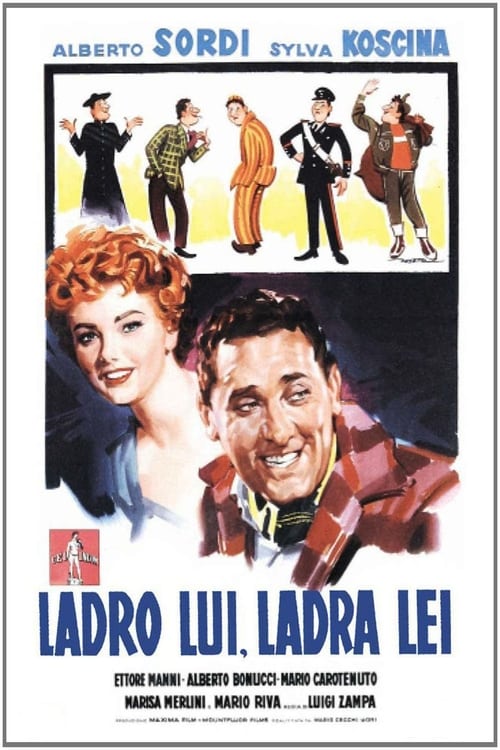
He Thief, She Thief
1958
No user ratings available yet
Representation score: 1.8 out of 10
Representation Score
Minimal
1954
Director
Lionello De Felice
Runtime
102 minutes
Average Rating
No ratings yetNew Showbiz Analysis
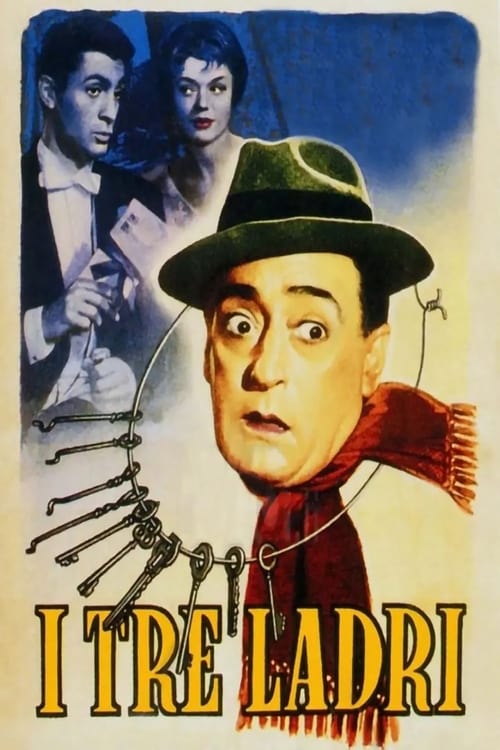
The Three Thieves is a comedy set in the 1950s that follows traditional social norms. It uses well-known clichés about infidelity and minor crimes to create humor, rather than challenging existing social structures. The film does not aim for diverse representation, sticking to Eurocentric and traditional casting practices. It serves as a typical mid-century comedy without attempting to subvert social norms. Overall, the narrative centers on situational farce, offering little engagement with diverse identities or broader social critiques.
Category Breakdown
The film does not include any characters with non-binary gender identities or same-sex relationships. The story revolves around traditional heterosexual romance.
Women's roles in the film are defined by domestic scandals and infidelity. The wife's power comes from her letters, but the plot depends on traditional gendered humor.
The film reflects the homogenous demographics of mid-century Italy. There is no indication of a diverse cast or multi-ethnic representation.
The story uses petty crime and deception as comedic elements. It does not critically examine institutions but instead focuses on situational ethics typical of mid-century farce.
There are no characters with visible or invisible disabilities in the film.
Present on Screen
Limited or Absent
Official Synopsis
Tapioca, a small-time thief, hides out in an elegant apartment, where he is soon joined by Cascarilla, one of his apprentices who has become better than his master. When the owners arrive home, the latter offers the wife a bunch of love letters she has written to various lovers for ten million.
1958
1976
1961

1958
1959
1960
1953
1959
No reviews yet. Be the first to share your thoughts on this movie!
Use the rating form above to leave a star rating and optional review.