
The Persian Lamb Coat
1980
No user ratings available yet
Representation score: 3.9 out of 10
Representation Score
Minimal
1950
Director
Mario Soldati
Runtime
96 minutes
Average Rating
No ratings yetNew Showbiz Analysis
Mario Soldati’s comedy operates as a typical mid-century European narrative, reflecting the social structures of 1950s Italy. The film leans on established archetypes rather than challenging them. Character dynamics favor male protagonists, with women playing supporting roles that advance the plot. Culturally, the film stays within a homogeneous European context, focusing on individual misadventures and religious devotion without delving into broader systemic or diverse perspectives.
Category Breakdown
The film does not include any characters with non-binary or LGBTQ+ identities. It follows traditional romantic and platonic storylines typical of 1950s Italian comedies.
The story revolves around a male-dominated journey involving a painter and a dresser. Female characters such as Cleo and the music hall star mainly serve as plot catalysts or objects of pursuit.
The film features a predominantly European cast, including a French protagonist in Rome. There is no indication of non-white representation in the main storyline.
The plot incorporates traditional themes of religious pilgrimage and devotion. It adheres to conventional comedic clichés without critiquing Western institutions or social norms.
There are no visible or invisible disabilities portrayed among the central characters in the narrative.
Present on Screen
Limited or Absent
Official Synopsis
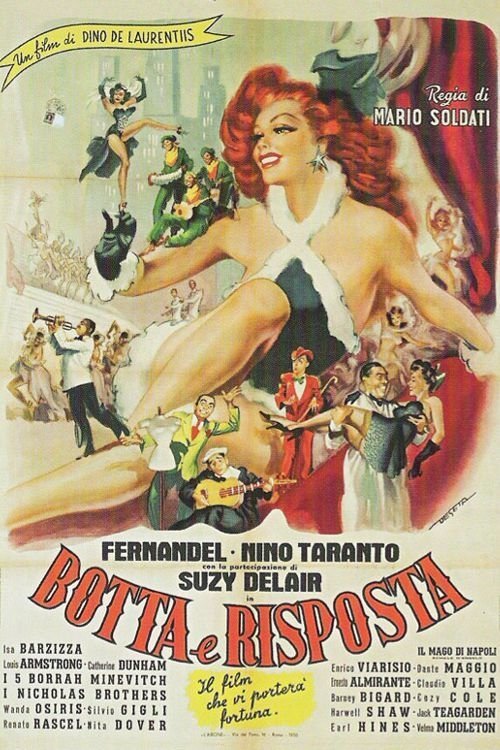
Good-natured and devout, a French house painter takes the train to Rome, where he has decided to go on a pilgrimage. There he meets a scatterbrained dresser who has been assigned by a music hall star to bring her the gown she is to wear on stage. The two men get stolen by Cleo, a charming thief. Once in Rome, the painter finds himself penniless and the dresser without the gown...
1980

1952
1954
1950
1954
1960
1991
1950
No reviews yet. Be the first to share your thoughts on this movie!
Use the rating form above to leave a star rating and optional review.