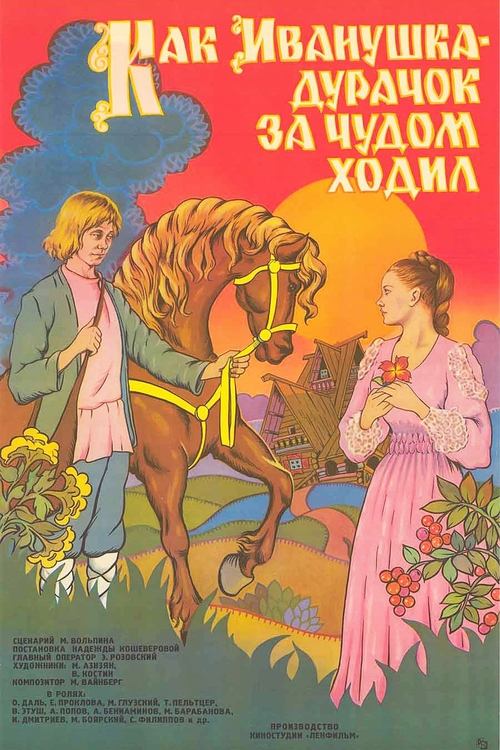
How Ivanushka the Fool Travelled in Search of Wonder
1977
No user ratings available yet
Representation score: 6.0 out of 10

Representation Score
Fair
1968
Director
Nadezhda Kosheverova
Runtime
90 minutes
Average Rating
No ratings yetNew Showbiz Analysis
A Very Old Story functions as a meta-textual critique of the fairy-tale genre. It explores the tension between art and life through the contrast between a puppeteer's bleak reality and his fantastical creations. The film's strength lies in its psychological realism and its rejection of a traditional, idealized romantic resolution. By allowing the princess to reject the soldier, the narrative moves away from rigid folklore clichés. However, the film remains limited by a lack of modern multi-layered markers. It operates within a culturally homogeneous framework that lacks representation of diverse racial identities or LGBTQ+ orientations.
Category Breakdown
The film does not explicitly depict LGBTQ+ identities. The story focuses on a traditional romance between a soldier and a princess within a conventional gender binary framework.
The princess demonstrates intellectual ability to act by challenging suitors with riddles. She rejects the passive female stereotype by refusing the soldier's pursuit and romantic idealism.
The production maintains a culturally homogeneous aesthetic typical of its era and genre. There is no indication of a multi-ethnic cast or diverse racial identities.
The story critiques traditional power structures by highlighting systemic poverty and the artificiality of monarchy. It favors a secular, realist worldview over moralistic or religious fables.
There are no visible or invisible disabilities portrayed in the narrative. No characters are depicted with neurodivergence or physical disabilities.
Present on Screen
Limited or Absent
Official Synopsis
Based on the famous fairytale "The Tinderbox" by Hans Christian Andersen. The main character of the film is a puppeteer who lives in a poor and gray world. He composes a fairy tale in which he himself, in the guise of a brave soldier, finds a flint and is helped by a kind wizard. The soldier falls in love with a spoiled, capricious princess who, as befits a princess, poses riddles to her numerous suitors. Her father, the king, is eager to see the soldier as her husband, as he believes the soldier has a great deal of gold. In the fairy tale, everything ends well, but in real life, not so much. "But life is not a fairy tale," his beloved girl says to him as she bids him farewell.
1977
1965
1984
1966
1966
1960
2012
1989
No reviews yet. Be the first to share your thoughts on this movie!
Use the rating form above to leave a star rating and optional review.