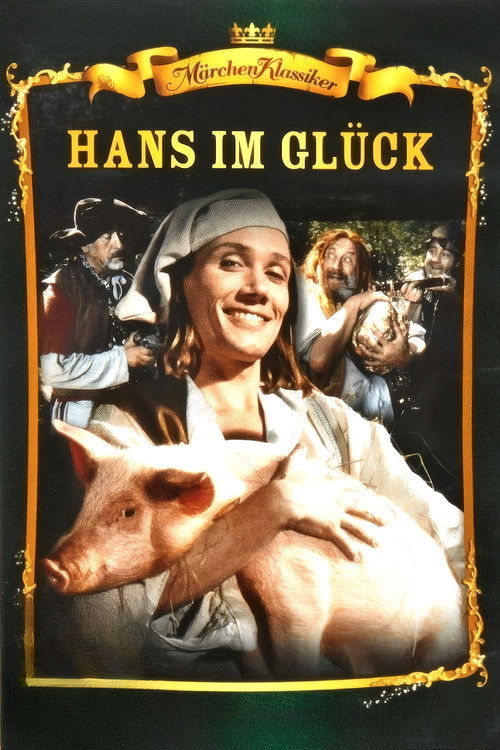
Hans im Glück
1999
No user ratings available yet
Representation score: 1.2 out of 10

Representation Score
Limited
1986
Director
Walter Beck
Runtime
77 minutes
Average Rating
No ratings yetNew Showbiz Analysis
Bearskin is a traditional European folk-fantasy that prioritizes classical moral storytelling over social deconstruction. The narrative follows a standard arc of individualistic redemption, focusing on a soldier's pact with the devil and his subsequent social reintegration. The film adheres to the demographic homogeneity typical of its era and genre. It lacks characters reflecting multiple aspects of diversity, focusing instead on a localized, post-war European setting with a straight-centered romantic core. While the protagonist's social exile offers a slight departure from hyper-masculine clichés, the film ultimately reinforces traditional social hierarchies and conventional gender roles.
Category Breakdown
The story centers around a relationship that assumes everyone is straight or cisgender. It lacks characters with non-binary genders or narratives that challenge traditional courtship dynamics.
Christoffel drives the plot through his supernatural pact, while Katarina mainly serves as an emotional motivator. The film follows conventional structures rather than challenging gender hierarchies.
Set in a post-war European context, the film focuses on localized social structures. It lacks evidence of multicultural integration or a diverse cast.
The film operates as a moral fable exploring individual choices and supernatural consequences. It does not overtly critique Western institutions like religion or capitalism.
The protagonist's extreme unkemptness serves as a metaphor for social 'otherness.' This functions as a plot device for isolation rather than an authentic exploration of disability.
Present on Screen
Limited or Absent
Official Synopsis
The war is over and soldier Christoffel has no prospects for the future and no money. He doesn't know what to do, so he meets the devil. He offers him a pact: Christoffel's pockets are always full of money, but he is not allowed to wash, cut his hair or nails for seven years and he is not allowed to sleep in a bed. If he doesn't keep to all these things, he will be forever devoted to the devil. Christoffel accepts the condition. Relieved of his worries about the future, Christoffel sets off. However, he soon becomes lonely. Society avoids him; he is dirty, unkempt and smelly. He only finds a place to stay in prison. He pays off the debts of a goldsmith, which wins him the heart of Katarina, the goldsmith's daughter. However, Christoffel is aware of his appearance and leaves her. After seven years, he is finally cleansed by the devil himself and returns to her as a well-groomed man.
1999

1982

1954
1960

1997

1989
1984
2006
No reviews yet. Be the first to share your thoughts on this movie!
Use the rating form above to leave a star rating and optional review.