
Father's Trip
1966
No user ratings available yet
Diversity score: 2.6 out of 10
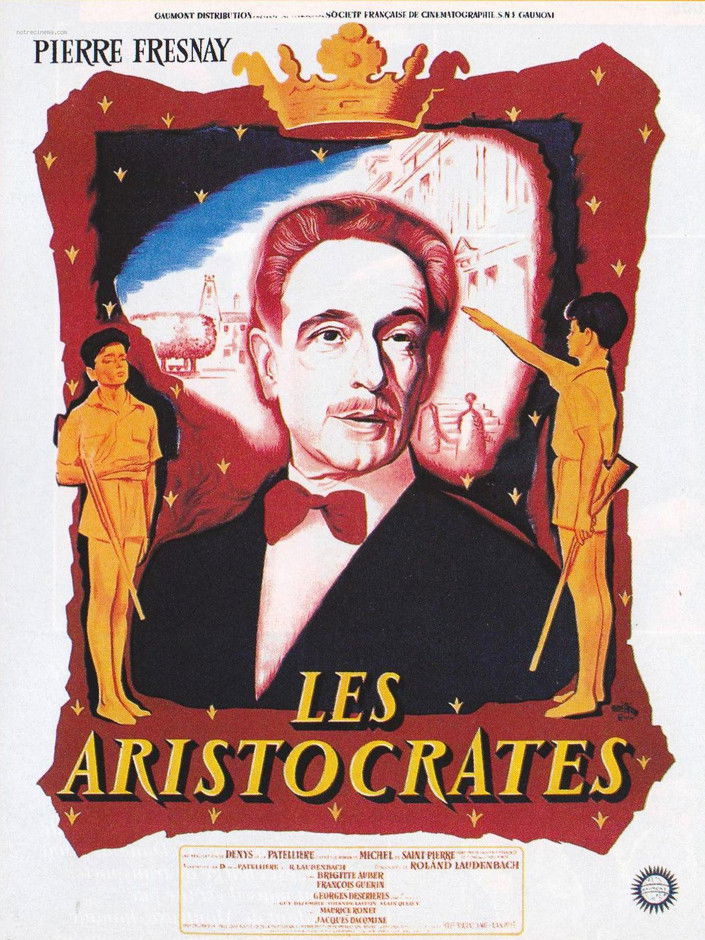
1955
Director
Denys de La Patellière
Runtime
100 minutes
Average Rating
No ratings yetSynopsis
A novel by Michel De Saint Pierre was the source for Les Aristocrates. Pierre Fresnay stars an aging Marquis, who tries his best to uphold the traditions of nobility in an ever-changing world. The Marquis' children prefer the trappings of modern society and pop culture and regard their father as a relic. This cultural clash nearly results in tragedy when two of the Marquis' offspring substitute recklessness for common sense.
Overall Score
Limited
Category Breakdown
LGBTQ+ Representation
The film operates within the heteronormative social frameworks standard to 1955. There is no evidence of queer narratives or non-cisnormative identities.
Gender Representation
The story centers on a patriarchal figure struggling to maintain authority. While the children's recklessness disrupts stability, the conflict focuses on class rather than gendered agency.
Racial & Ethnic Diversity
The drama reflects the homogeneous social structures of mid-century France. No diverse cast or non-white perspectives are indicated within the primary character arcs.
Religious & Cultural Diversity
The narrative critiques the decline of Western aristocratic institutions. It frames this through generational friction rather than a systemic or progressive anti-institutionalist lens.
Disability Representation
There is no evidence that disability, neurodivergence, or chronic illness play a role in the character development or narrative.
Strengths
Areas for Improvement
AI Analysis
The film is a traditional period drama focused on the erosion of class-based social structures. It explores the tension between decaying aristocratic traditions and the encroaching influence of modern pop culture through a generational lens. While the story disrupts the idea of an unshakeable nobility by portraying them as vulnerable, it does so through a conventional dramatic framework. The narrative prioritizes the preservation of social order over the exploration of intersectional identities. Ultimately, the work serves as a reflection of mid-century social shifts rather than a proactive challenge to established cultural hierarchies.
1966
1955
1942
1959
1956
1963
1943
1960
1957

1966
1958
1959
No reviews yet. Be the first to share your thoughts on this movie!
Use the rating form above to leave a star rating and optional review.