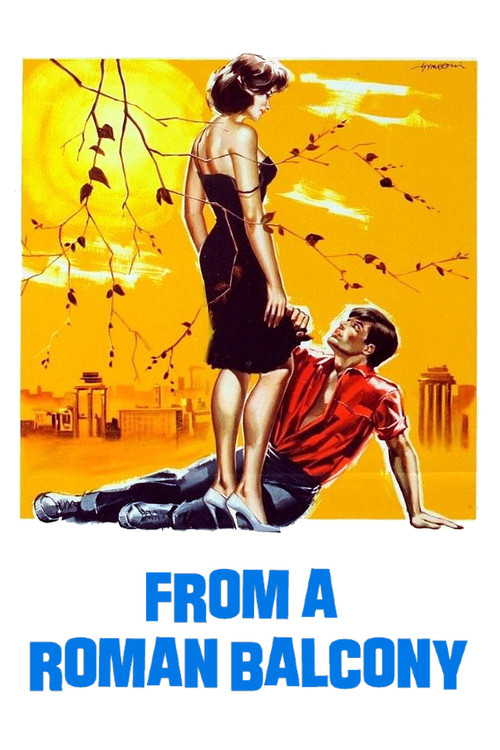
From a Roman Balcony
1960
No user ratings available yet
Representation score: 3.2 out of 10

Representation Score
Minimal
1960
Director
Dino Risi
Runtime
104 minutes
Average Rating
No ratings yetNew Showbiz Analysis
Love in Rome is a product of its specific mid-century Italian context, functioning more as a social critique of class than a tool for progressive representation. It lacks modern diversity, particularly regarding race and LGBTQ+ identities. However, the film finds depth in its moral relativism. By deconstructing the era's emerging consumerist values and traditional virtues, it offers a cynical look at the erosion of social structures during the Italian economic miracle. Ultimately, the film's strengths lie in its observational critique of social mores rather than its commitment to identity-based representation.
Category Breakdown
The film strictly follows the assumption that everyone is straight or cisgender. There are no non-assuming gender matches what was assigned at birth gender identities or same-sex relationships in the story.
The female protagonist actively drives the story through her pursuit of social advancement. However, the film reinforces traditional gender roles and focuses on male perspectives and the consequences of infidelity.
The cast is primarily white and European, reflecting the socio-historical context of 1960s Italy. The film does not include non-white characters or multi-layered casting to challenge this homogeneity.
The story challenges the simplistic morality of the time by focusing on characters who navigate situational ethics and social deception. It criticizes the superficiality of consumerist lifestyles through a cynical lens.
There are no characters with visible or invisible disabilities in the narrative. The story does not use disability as a plot device or central theme.
Present on Screen
Limited or Absent
Official Synopsis
A young impoverished aristocrat and struggling writer falls for the charms of an aspiring starlet, whose amoral nature and hungry curiosity drives her from one adventure to another.
1960

1961

1962

1956
1962
1958

1962
1965
No reviews yet. Be the first to share your thoughts on this movie!
Use the rating form above to leave a star rating and optional review.