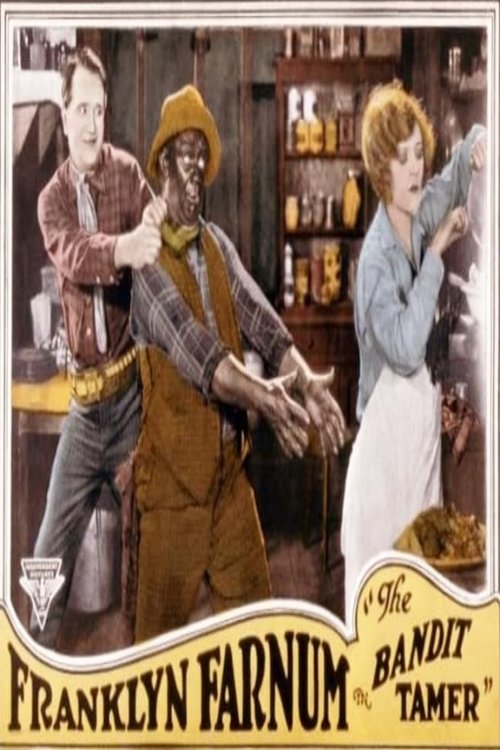
The Bandit Tamer
1925
No user ratings available yet
Diversity score: 1.9 out of 10

1927
PassedDirector
J.P. McGowan
Runtime
50 minutes
Average Rating
No ratings yetSynopsis
When his master is attacked and left speechless, Ranger is held responsible. On the lam from the Law, the canine hero links up with telegrapher Bill Brady and Bill's girlfriend Helen Meadows. He gets a chance to clear his name by helping Bill trap a pair of outlaws who plan to blow up a mail train and abscond with the loot.
Overall Score
Limited
Category Breakdown
LGBTQ+ Representation
The film focuses on a traditional romantic pairing between Bill Brady and Helen Meadows. There is no evidence of non-cisnormative identities or same-sex intimacy.
Gender Representation
Agency is primarily distributed among male characters and the canine protagonist. Helen Meadows occupies a supporting role within a male-driven plot structure.
Racial & Ethnic Diversity
The narrative follows a standard Western framework typical of 1927. It lacks evidence of non-white majority casting or diverse ethnic representation.
Religious & Cultural Diversity
The story utilizes a traditional morality framework centered on law and order. It reinforces established notions of heroism versus criminal elements.
Disability Representation
No characters are depicted with visible or invisible disabilities. A master's loss of speech serves as a plot catalyst rather than a nuanced exploration.
Strengths
Areas for Improvement
AI Analysis
The Outlaw Dog is a quintessential product of 1920s action cinema, prioritizing kinetic storytelling and clear-cut moral archetypes. The narrative relies on established genre conventions that reinforce the social norms of the era. Representation is minimal, with the film centering on heteronormative romance and male-driven agency. The plot follows a standard hero's journey that lacks intersectional complexity or subversion of traditional hierarchies. Ultimately, the film functions as a homogeneous piece of early Hollywood history. It offers little disruption to the period's standard demographic and cultural structures.
1925
1927
1926
1956
1922
1925

1926
1936
1903
1939
1935
1980
No reviews yet. Be the first to share your thoughts on this movie!
Use the rating form above to leave a star rating and optional review.