Rainy Dog
1997
No user ratings available yet
Diversity score: 4.5 out of 10
2000
Director
Takashi Miike
Runtime
114 minutes
Average Rating
No ratings yetSynopsis
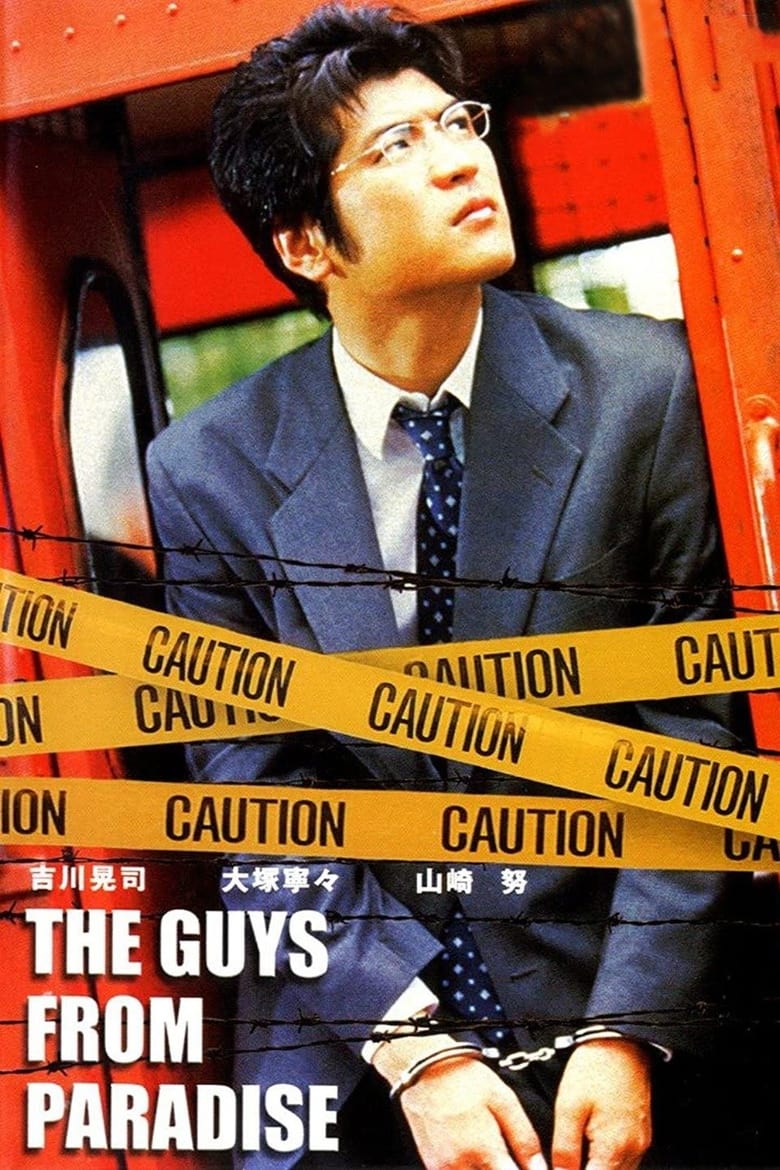
Set in the Philippines, Takashi Miike’s “The Guys from Paradise” weaves together the stories of several real-life criminal cases. Young up-and-coming salary man Kohei Hayakawa is sent to Paradise prison on false drug charges, and assumes his lawyers will clear up this misunderstanding fairly quickly. However, he soon comes to the realization that his innocence means less than how much bribe money he’s able to come up with for his release. It becomes apparent that Kohei is going to have to get to know his fellow inmates a little better, as he’s obviously in this situation for the long haul; but meeting a female inmate from a nearby jail certainly makes his transition to the criminal life a little easier to take.
Overall Score
Fair
Category Breakdown
LGBTQ+ Representation
The film shows potential for subverting heteronormative expectations through non-normative interpersonal dynamics. However, there is no explicit evidence of queer identities or same-sex intimacy.
Gender Representation
The prison setting disrupts traditional domestic gender hierarchies. Miike complicates notions of masculine strength by often portraying conventional authority figures as inept or systemically flawed.
Racial & Ethnic Diversity
Focusing on Japanese citizens imprisoned abroad allows for an exploration of national identity within foreign landscapes. This provides a perspective that moves beyond a purely homogeneous domestic view.
Religious & Cultural Diversity
The narrative critiques institutional stability by focusing on the carceral system. It leans toward moral relativism and rebellion against rigid, oppressive societal structures.
Disability Representation
There is a lack of specific details regarding neurodivergence or physical disability. Physical trauma in this genre often serves as a plot device rather than a tool for agency.
Strengths
Areas for Improvement
AI Analysis
Takashi Miike’s direction suggests a film focused on displacement and the friction between individuals and institutions. By centering on Japanese citizens incarcerated in foreign lands, the story naturally explores the outsider experience and critiques systemic power. The film prioritizes the disruption of social order over traditional demographic representation. While it avoids conventional morality, it lacks specific evidence regarding disability or explicit LGBTQ+ identities. Ultimately, the work functions as a study of characters existing on the fringes of legality, using the prison environment to challenge established societal norms.
1997
2000

2007

2000

2001

1976

2012

1984
2010

1978
2021

2014
No reviews yet. Be the first to share your thoughts on this movie!
Use the rating form above to leave a star rating and optional review.