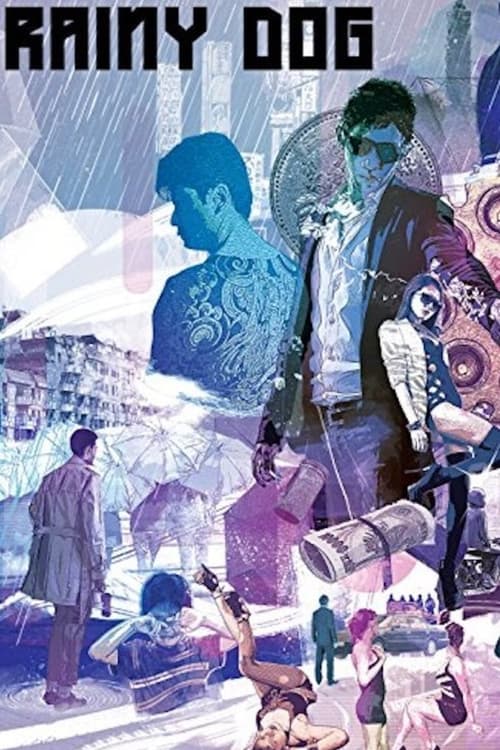
Rainy Dog
1997
No user ratings available yet
Representation score: 6.3 out of 10
Representation Score
Good
2000
RDirector
Takashi Miike
Runtime
102 minutes
Average Rating
No ratings yetNew Showbiz Analysis
The film excels in its portrayal of a globalized, multicultural underworld. By centering a Brazilian-Japanese protagonist and involving diverse ethnic factions, it avoids the homogeneous depictions common in crime dramas. However, the film's approach to psychological states feels more aesthetic than empathetic. While it explores neurodivergent-coded experiences, these often serve the surrealist atmosphere rather than providing ability to act to characters with disabilities. Ultimately, the work is a postmodern crime drama that prioritizes ethnic complexity and moral relativism over explicit representation of LGBTQ+ identities or traditional character-driven disability narratives.
Category Breakdown
The film does not include explicit LGBTQ+ identities or non-cisgender expressions. While the surreal tone challenges social structures, there is no clear queer-coded subtext or critique of the assumption that everyone is straight or cisgender.
Gender hierarchies are disrupted by a non-linear perspective that obscures traditional roles. The female presence avoids submissive archetypes, appearing instead as a fragmented and elusive narrative element.
The narrative showcases high multi-layered complexity through its Brazilian-Japanese protagonist. It depicts a multicultural underworld involving Chinese, Japanese, and Russian factions within a Japanese-Portuguese community.
The film portrays a world where traditional institutions are rendered irrelevant by a chaotic environment. It favors subjective, situational ethics over singular, objective morality.
Psychological instability and hallucinatory sequences serve as stylistic narrative devices. These elements function more as tools for atmospheric tension than as nuanced character studies of disability.
Present on Screen
Limited or Absent
Official Synopsis
Brazilian-Japanese gangster Mario rescues his Chinese girlfriend Kei as she's about to be deported from Japan. Desperate to escape, he hides in Tokyo's booming Japanese-Portuguese community and seeks passage from the country from a Russian mobster. To meet his price, they hold up a bigtime drug deal between the Chinese Mafia and the local Yakuza.
1997
1999
1999
1989
1990

2000
2001

2012
No reviews yet. Be the first to share your thoughts on this movie!
Use the rating form above to leave a star rating and optional review.