Murder at Midnight
1931
No user ratings available yet
Representation score: 1.6 out of 10
Representation Score
Minimal
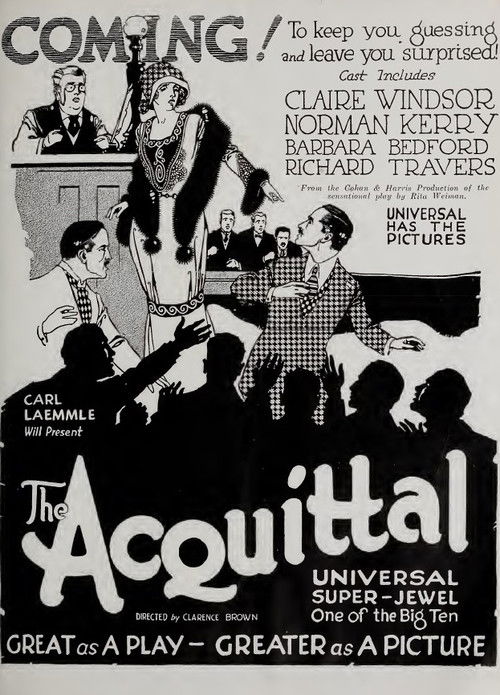
1923
PassedDirector
Clarence Brown
Runtime
70 minutes
Average Rating
No ratings yetNew Showbiz Analysis
The Acquittal is a conventional silent-era mystery that emphasizes traditional storytelling over challenging social norms. While it offers a slight departure from gender norms through its female lead, it remains largely anchored in the era's status quo. The film's strength lies in its subversion of the passive female cliché, giving a woman the investigative role typically reserved for men. However, this role is framed through familial obligations rather than a broader challenge to gender hierarchies. Ultimately, the film lacks depth in addressing diverse identities and systemic issues. It presents a homogeneous view of class and race, focusing on a white, upper-class family structure without engaging with diverse identities or critical perspectives.
Category Breakdown
The film follows the social norms of the early 1920s and does not include any same-sex relationships or non-cisgender identities.
The daughter-in-law plays a significant role by taking the lead in investigating the crime. She challenges the stereotype of the passive female bystander, but her actions are still tied to traditional domestic roles.
The story focuses on a wealthy, likely Anglo-Saxon, upper-class family. It reflects the era's tendency towards racial homogeneity, emphasizing a white elite social norm.
The plot operates within a traditional Western framework of justice and class. It highlights the sanctity of the family and legal institutions without questioning them.
The film does not depict any physical or neurodivergent disabilities.
Present on Screen
Limited or Absent
Official Synopsis
When a wealthy man is found murdered in his bedroom, one of his two adopted sons is arrested and charged with the killing. However, the verdict at his trial is an acquittal. Since the police don't seem to be particularly interested in finding the real killer, the dead man's daughter-in-law--the wife of the adopted son who wasn't charged--takes it upon herself to solve the crime.
1931

1930
1936
1940
1932

1983
1929
1944
No reviews yet. Be the first to share your thoughts on this movie!
Use the rating form above to leave a star rating and optional review.