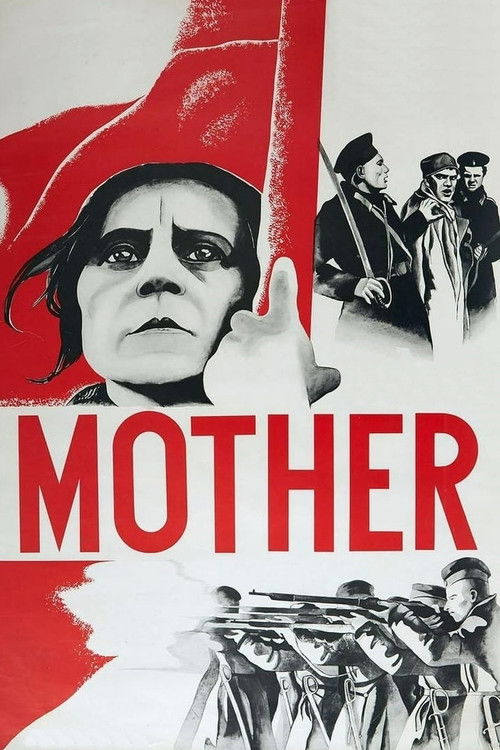
Mother
1926
No user ratings available yet
Representation score: 4.5 out of 10

Representation Score
Limited
1927
Not RatedDirector
Vsevolod Pudovkin
Runtime
74 minutes
Average Rating
No ratings yetNew Showbiz Analysis
Pudovkin’s work emphasizes collective action over individual heroics, using montage to elevate the proletariat as a unified protagonist. This focus on class-based struggle shapes the film's identity, although it leaves little room for individual identity markers like queer narratives or disability representation. The film stands out in its systemic critique, breaking down traditional power structures such as the Church and the state. By portraying the breakdown of these institutions as a moral necessity, it achieves a high level of cultural and ideological depth. While gender representation is strong through the inclusion of women in political roles, the film remains ethnically homogeneous. It relies on socioeconomic status as a proxy for identity, which limits its breadth in terms of racial and ethnic diversity.
Category Breakdown
The film does not depict any non-straight relationships or identities. Its narrative focuses solely on historical class struggles and socio-economic issues.
Women are shown as active participants in the revolutionary movement rather than passive domestic figures. They play a significant role in destabilizing the social order.
The cast is predominantly made up of people from similar backgrounds due to the historical context of the Russian Empire. However, the film uses the peasant archetype to represent underrepresented class struggles.
The film provides a deep critique of the Orthodox Church and Tsarist autocracy, presenting them as oppressive institutions. It portrays the dissolution of these institutions as a necessary step in historical progress.
There is no significant focus on physical disabilities or neurodivergence. Characters are primarily defined by their roles in the labor force and the class struggle.
Present on Screen
Limited or Absent
Official Synopsis
Shortly before the outbreak of WWI, a peasant from rural Russia arrives in St. Petersburg to find work.
1926

1925
1933

1930
1917
1925
1927

1940
No reviews yet. Be the first to share your thoughts on this movie!
Use the rating form above to leave a star rating and optional review.