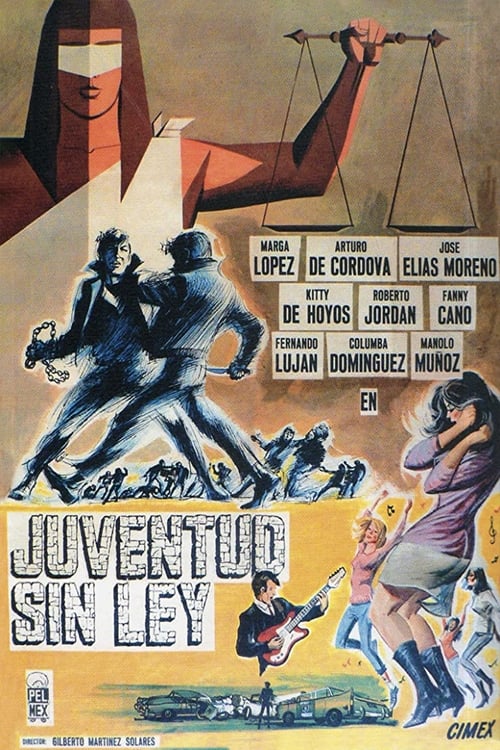
Lawless Youth
1965
No user ratings available yet
Representation score: 2.3 out of 10
Representation Score
Fair
1956
Director
Alfonso Corona Blake
Runtime
96 minutes
Average Rating
No ratings yetNew Showbiz Analysis
The film functions as a social drama that prioritizes situational ethics over moralistic storytelling. It explores how socioeconomic and domestic pressures drive juvenile delinquency, offering a critique of institutional stability. While the film lacks modern markers of diversity, it succeeds in presenting a non-Western perspective through its Mexican setting. The narrative moves beyond simple formulas by examining the environmental causes of crime. However, the work remains limited by the era's conventions. It relies on traditional gender roles and lacks explicit representation of diverse identities, focusing instead on the struggles of its male leads.
Category Breakdown
The film adheres to the traditional social frameworks of 1950s Mexican melodrama and does not include any LGBTQ+ characters or narratives that question straight relationships.
The story focuses on male protagonists and their responses to domestic violence. While a mother is mentioned, she does not play a significant role in driving the story.
Set in Mexico City, the film reflects the local population demographics. It offers a non-Western perspective without explicitly addressing racial hierarchies.
The story challenges traditional morality by showing criminal acts as reactions to systemic hardship. Characters are portrayed as products of their environment, not purely as villains.
A character becomes blind due to violence, introducing sensory disability into the plot. It is unclear whether this disability provides real power or serves as a tragic device.
Present on Screen
Limited or Absent
Official Synopsis
The story focuses in on three young boys who, arrested by the authorities, await sentencing in Mexico City's Juvenile Court. One boy has killed his stepfather to protect his mother; the second boy has been goaded into blinding his chief tormentor; and the third resorts to stealing to support his family.
1965
1950
1951

1980
1969

1938
1955

1979
No reviews yet. Be the first to share your thoughts on this movie!
Use the rating form above to leave a star rating and optional review.