
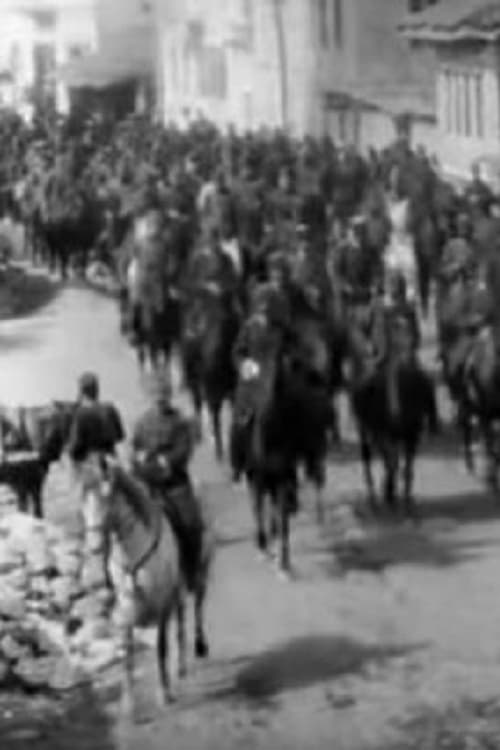
Parades of the Turkish Artillery in Bitola
1905
No user ratings available yet
Diversity score: 2.9 out of 10
No Poster Available
1905
Director
Milton Manaki, Yanaki Manaki
Runtime
2 minutes
Average Rating
No ratings yetSynopsis
A short prior to World War I film which captures festivities at a fair near a church in Bitola.
Overall Score
Limited
Category Breakdown
LGBTQ+ Representation
The footage captures a traditional religious gathering from 1905. There is no evidence of non-cisnormative identities or same-sex intimacy, reflecting the heteronormative standards of the era.
Gender Representation
Women are visible within the communal festivities but appear within conventional roles. The film depicts a standard social hierarchy without subverting gender norms or traditional masculinity.
Racial & Ethnic Diversity
The film offers a look at the ethnic composition of Ottoman-era Bitola. While the population appears ethnically homogeneous, it provides valuable documentation of a specific cultural identity.
Religious & Cultural Diversity
The film centers on the 'Holy Sunday' Church and traditional celebrations. It functions as a preservation of the status quo rather than a critique of religious institutions.
Disability Representation
The brief, documentary nature of the footage provides no discernible evidence regarding the representation of individuals with visible or invisible disabilities.
Strengths
Areas for Improvement
AI Analysis
This 1905 documentary by the Manaki brothers serves as a raw ethnographic record of communal life in Bitola. Because it is a non-narrative historical document, it lacks the intentionality or character arcs required to challenge social hierarchies. The film captures a snapshot of a conservative, religious society. It reflects the social fabric of the early 20th-century Balkans through a literal lens, offering historical authenticity rather than modern social commentary. Ultimately, the low diversity score is a byproduct of the film's era and genre. It documents a traditional status quo rather than utilizing modern narrative tools to deconstruct systemic structures.
1905
1908
1905
1911
1905
1905
1896
1896
1909
1896
1937
1938
No reviews yet. Be the first to share your thoughts on this movie!
Use the rating form above to leave a star rating and optional review.