
The Stickleback's Eggs
1925
No user ratings available yet
Diversity score: 1.1 out of 10
1982
Director
Jean Painlevé
Runtime
27 minutes
Average Rating
No ratings yetSynopsis
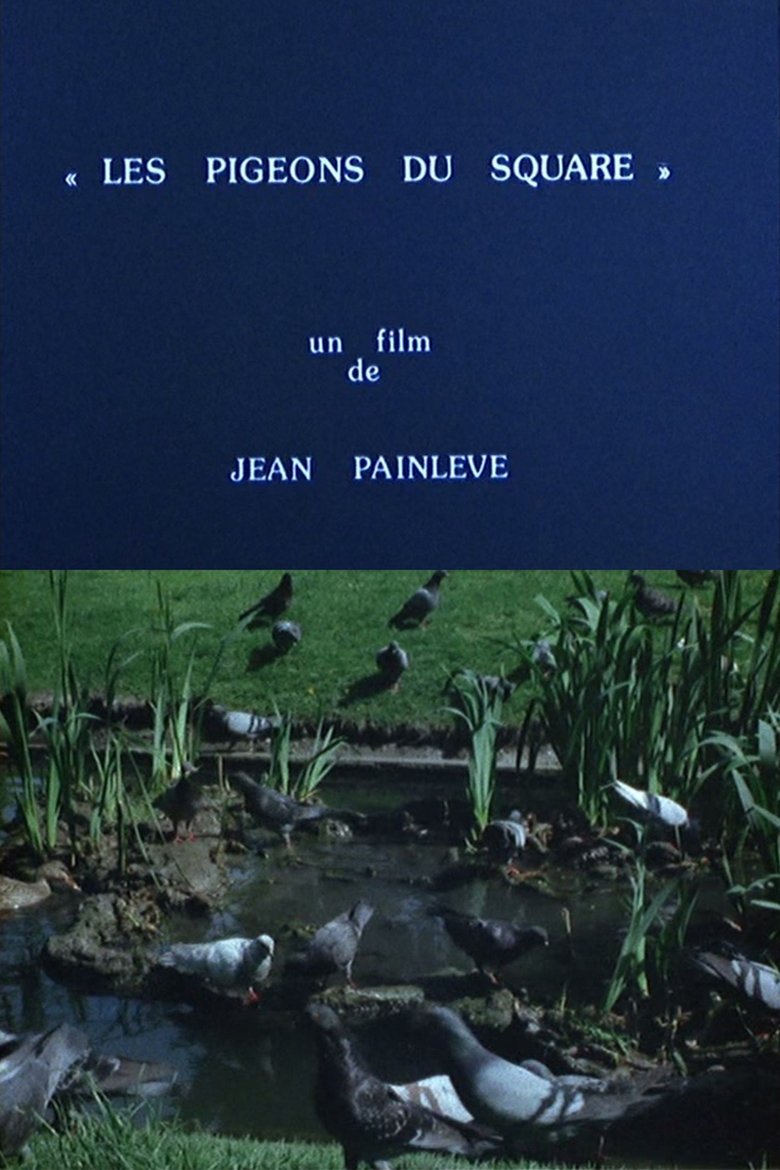
An enthusiastic grandfather sits with children in a Parisian park talking about pigeons. First. their physical appearance—eye, wings and tail, and color—and their varieties. Then, he encourages the children to imitate their walk. He points out courtship and mating rituals, then provides an illustrated discussion of how they eat. This section is punctuated by a flock of pigeons fighting over a small, hard ball each wants to eat; the narrator's describes it as if it were a soccer match. He concludes with a discussion of pigeons taking off, landing, and flying; he uses slow motion and stop-time photography to show his audience.
Overall Score
Minimal
Category Breakdown
LGBTQ+ Representation
The film focuses entirely on the biological courtship and mating rituals of pigeons. There are no human LGBTQ+ characters or narratives present.
Gender Representation
A grandfather interacts with children to teach them about birds. The film does not engage with gender hierarchies or social roles.
Racial & Ethnic Diversity
Set in a Parisian park, the film features a grandfather and children. It lacks evidence of diverse casting or racial metaphors.
Religious & Cultural Diversity
The film follows traditional educational structures through intergenerational knowledge transfer. It presents a standard, non-subversive scientific observation of nature.
Disability Representation
There are no characters with visible or invisible disabilities. Disability is not used as a narrative or plot element.
Strengths
Areas for Improvement
AI Analysis
Jean Painlevé’s documentary is a specialized biological study centered on ornithology. It utilizes technical innovations like slow-motion to deconstruct avian movements for an audience of children. Because the subject matter is strictly zoological, the film lacks human-centric character arcs or identity-driven dialogue. The narrative architecture prioritizes scientific rigor and naturalism over social commentary or intersectional representation. Ultimately, the work functions as a traditional nature study. It remains neutral regarding social and political frameworks, focusing instead on the pedagogical exchange of biological facts.
1925
1928
1935
1929
1961
2016
1952
1953
1955

2004
1896
1956
No reviews yet. Be the first to share your thoughts on this movie!
Use the rating form above to leave a star rating and optional review.