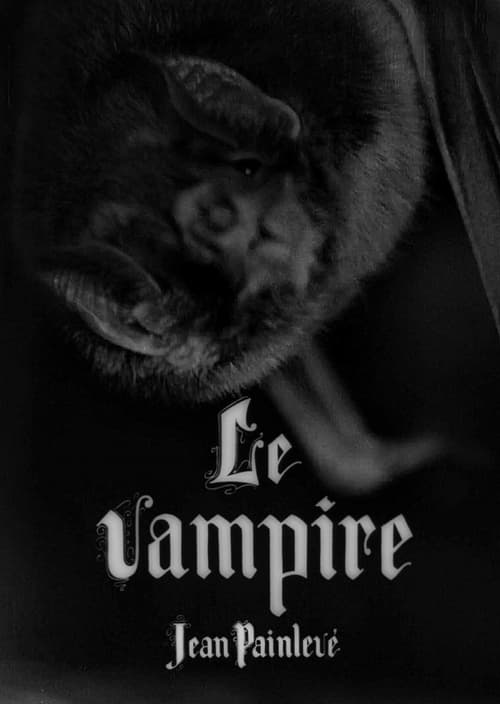
The Vampire
1945
No user ratings available yet
Diversity score: 1.3 out of 10

1925
Director
Jean Painlevé
Runtime
26 minutes
Average Rating
No ratings yetSynopsis
An educational film, a movie through a microscope, in two parts. Within minutes after the egg drops in the water, fertilization occurs and contractions start. Soon, in a fertilized egg, we see the germinal disc divide into two blastomeres. Divisions continue; contractions re-occur at the cap as it covers the egg. Title cards in French tell us what to watch for. Muscular movements and circulation appear; the heart beats. In part two, we see blood circulation begin as red cells develop on the surface of the yoke. They mass toward the heart. Arteries form, blood flows. The egg hatches and blood flows to new areas.
Overall Score
Minimal
Category Breakdown
LGBTQ+ Representation
The film contains no human characters. Consequently, it does not depict gender identity or sexual orientation, focusing instead on microscopic biological processes.
Gender Representation
As a study of non-human biological development, the film lacks depictions of gendered social roles or interpersonal dynamics.
Racial & Ethnic Diversity
The narrative is centered entirely on the physiological development of a species. There are no human casts or ethnic identifiers present.
Religious & Cultural Diversity
The work adopts a secular, materialist framework. It prioritizes empirical observation over the religious or moralistic explanations common in early 20th-century media.
Disability Representation
The microscopic footage does not include human characters. There are no depictions of neurodivergence or physical disability.
Strengths
Areas for Improvement
AI Analysis
Jean Painlevé’s documentary is a specialized scientific study of fertilization and embryonic development. Because the subject matter is strictly microscopic and non-human, it exists outside the traditional frameworks used to measure social identity, agency, or intersectionality. The film's primary contribution to diversity is its commitment to a secular, empirical worldview. By replacing theological narratives with biological reality, it avoids the anthropocentric and moralistic instructional styles of its era. Ultimately, the low score is a byproduct of the genre. The film's focus on cellular mechanics means it cannot engage with human-centric social hierarchies or representation.
1945
1982
1930
1928

1978
1935
1929

1930

2011
1964
2016

2019
No reviews yet. Be the first to share your thoughts on this movie!
Use the rating form above to leave a star rating and optional review.