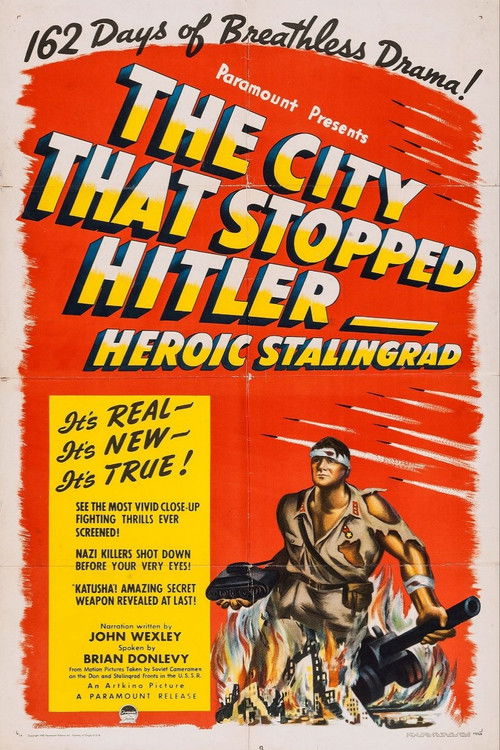
Stalingrad
1943
No user ratings available yet
Representation score: 4.4 out of 10
Representation Score
Limited
1945
PG-13Director
Yuli Raizman, Elizaveta Svilova
Runtime
70 minutes
Average Rating
No ratings yetNew Showbiz Analysis
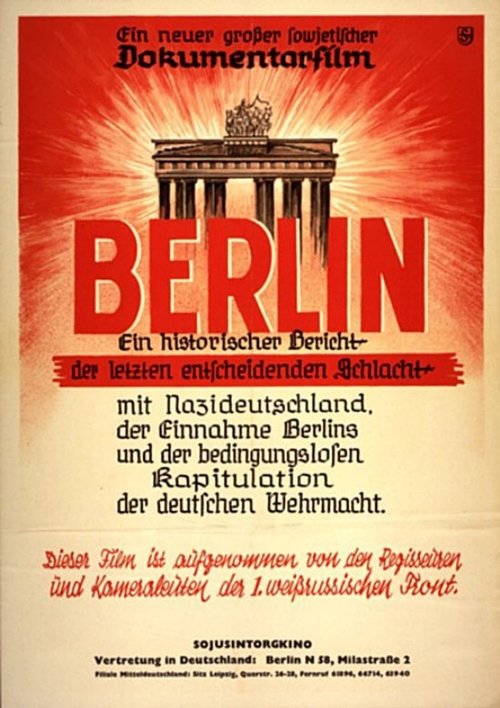
This film serves as a historical account of the Soviet offensive on Berlin, rather than a narrative focused on social representation. Its content is shaped by the geopolitical conditions and ideological demands of 1945 wartime cinema. Although the documentary showcases the multi-ethnic composition of the Red Army, it lacks contemporary intentions to address multiple aspects of identity. The emphasis is on state-driven collectivism and the defeat of the Nazi regime. Overall, the film reflects the functional gender roles and social hierarchies of the mid-20th century, prioritizing military achievements over individual or diverse identity stories.
Category Breakdown
The film does not include any LGBTQ+ characters or narratives. It focuses on the military operations of 1945 Soviet cinema.
The story centers around a male-dominated military structure. Women are shown in supportive roles such as medics, but the main actions are performed by male soldiers.
The film highlights the multi-ethnic makeup of the Soviet military through the 1st Belorussian and 1st Ukrainian Fronts. However, it emphasizes a particular Slavic identity.
The movie criticizes fascist systems and promotes a collective, state-oriented morality. It portrays the fall of the Nazi regime as a triumph for non-Western, anti-capitalist ideas.
The film does not depict characters with disabilities having significant roles. Physical injuries are shown as consequences of combat rather than a detailed look at disability.
Present on Screen
Limited or Absent
Official Synopsis
A Soviet documentary chronicling the final assault on Nazi Germany’s capital. More than forty frontline cameramen from the 1st Belorussian and 1st Ukrainian Fronts captured the battle and its aftermath, supplemented with seized German footage. The film records the destruction of Berlin and the symbolic collapse of Hitler’s regime, standing as both a historical chronicle and a work of Soviet wartime cinema.
1943
1943
2020
1942
1944
1943
1944

1943
No reviews yet. Be the first to share your thoughts on this movie!
Use the rating form above to leave a star rating and optional review.