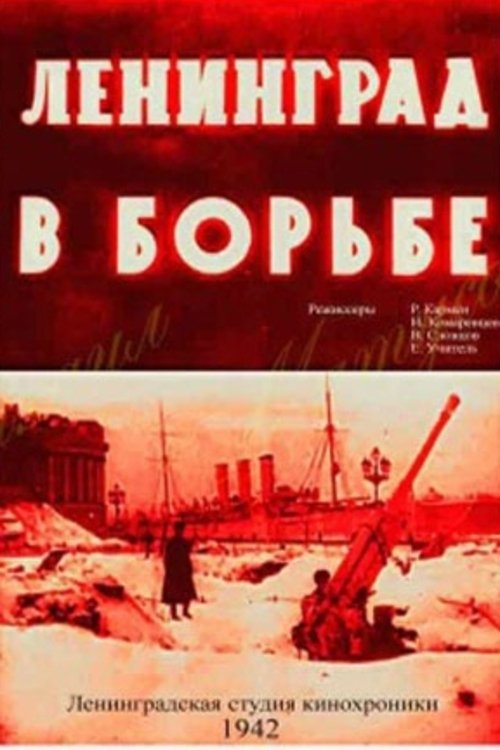
Leningrad in Struggle
1943
No user ratings available yet
Representation score: 4.1 out of 10
Representation Score
Fair
1943
NRDirector
Leonid Varlamov
Runtime
78 minutes
Average Rating
No ratings yetNew Showbiz Analysis
Stalingrad (1943) is a wartime propaganda film that emphasizes collective identity and national unity. Its narrative structure prioritizes the state and the survival of the political system over individual stories or diverse perspectives. While the film features women in active roles, it lacks representations of LGBTQ+ identities and flattens specific ethnic distinctions. Disability is used primarily to highlight the costs of conflict. Overall, the film effectively conveys a message of collective strength but falls short in offering nuanced, individual experiences.
Category Breakdown
There are no LGBTQ+ characters or non-straight relationships in the film. The story focuses solely on defenders and invaders to promote national unity.
Women play significant roles either driving the plot or providing essential support. However, their involvement is tied to national needs rather than personal freedom.
The film highlights the diverse ethnic makeup of the Red Army but presents a unified Soviet identity, minimizing specific ethnic differences.
The narrative supports Soviet collectivism and opposes Western individualism. It emphasizes the survival of the collective over individual rights.
Characters with physical injuries are shown as victims of war. Their disabilities are depicted as a result of violence rather than as individuals with ability to act.
Present on Screen
Limited or Absent
Official Synopsis
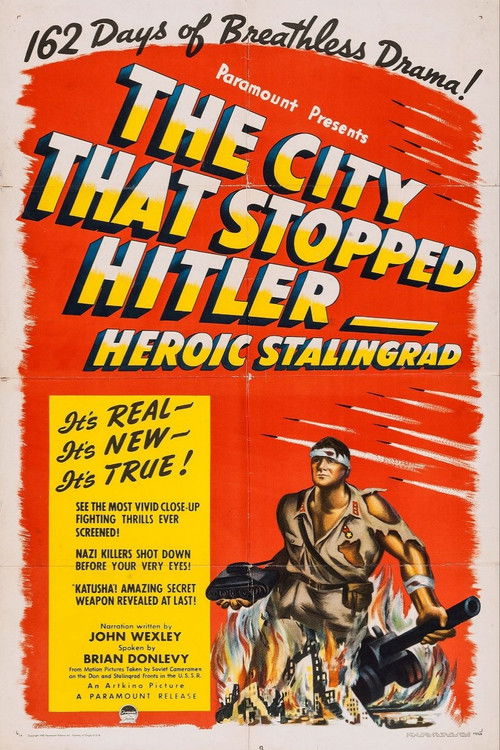
A Soviet documentary chronicling the Battle of Stalingrad, one of the turning points of World War II. Filmed on the front lines, it depicts the brutal devastation of the city, the resilience of its defenders, and the eventual Soviet counteroffensive that encircled and defeated the German 6th Army. Released internationally—with the U.S. version retitled The City That Stopped Hitler: Heroic Stalingrad—the film served both as a record of the Red Army’s victory and as a powerful work of wartime propaganda.
1943
1944
1945
1943
2020
1942
1944

1943
No reviews yet. Be the first to share your thoughts on this movie!
Use the rating form above to leave a star rating and optional review.