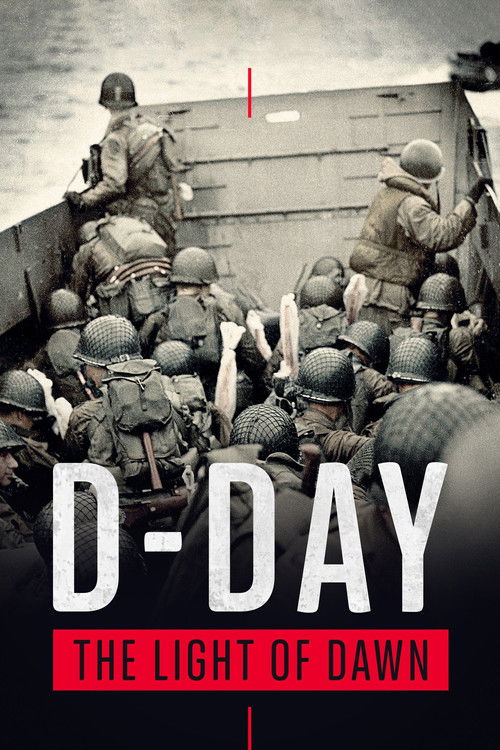
The Light of Dawn: The Normandy Landings
2014
No user ratings available yet
Diversity score: 2.5 out of 10
No Poster Available
1947
Director
Jean Grémillon
Runtime
53 minutes
Average Rating
No ratings yetSynopsis
The film starts by a visit to bucolic Normandy before the events. This peaceful atmosphere is shattered by Operation Overlord, minutely described in the second part of the documentary. The landing on D-Day and the ensuing battles and bombings martyr the peaceful area giving the earth thousands of body instead of seeds. In the last part, the dreadful aftermath of the steel storm is shown both with sympathy for the victims and hope for the future, since all these sacrifices, whether military or civilians, have not been in vain.
Overall Score
Limited
Category Breakdown
LGBTQ+ Representation
The film lacks any evidence of LGBTQ+ characters or narratives. Its scope remains strictly centered on the macro-events of the D-Day landings.
Gender Representation
The narrative prioritizes military agency and the 'steel storm' over domestic perspectives. While civilians are mentioned as victims, there is no subversion of traditional gender hierarchies.
Racial & Ethnic Diversity
The film focuses on the Western European theater and the liberation of France. It reflects the demographic realities of the era's primary combatants in Normandy.
Religious & Cultural Diversity
The documentary avoids singular religious morality, focusing instead on universal tragedy and collective sacrifice. It remains rooted in a traditional Western historical framework.
Disability Representation
The film depicts the aftermath of war and thousands of casualties. However, these are presented as combat victims rather than characters with lived experiences of disability.
Strengths
Areas for Improvement
AI Analysis
Jean Grémillon’s documentary serves as a historical record of the transition from pastoral Normandy to the devastation of Operation Overlord. The film prioritizes the landscape and the mechanical scale of the invasion over individual identity-driven narratives. Because the work functions as a mid-20th-century military history, it does not engage with modern frameworks of intersectionality or social hierarchy. The focus is on the geopolitical event and the martyrdom of the land. Ultimately, the film is a study of collective sacrifice and the human cost of systemic conflict, rather than a platform for diverse social representation.
2014
2014
2019
1967
2019
1945
2011
1953

1943
1945
2014
1944
No reviews yet. Be the first to share your thoughts on this movie!
Use the rating form above to leave a star rating and optional review.