
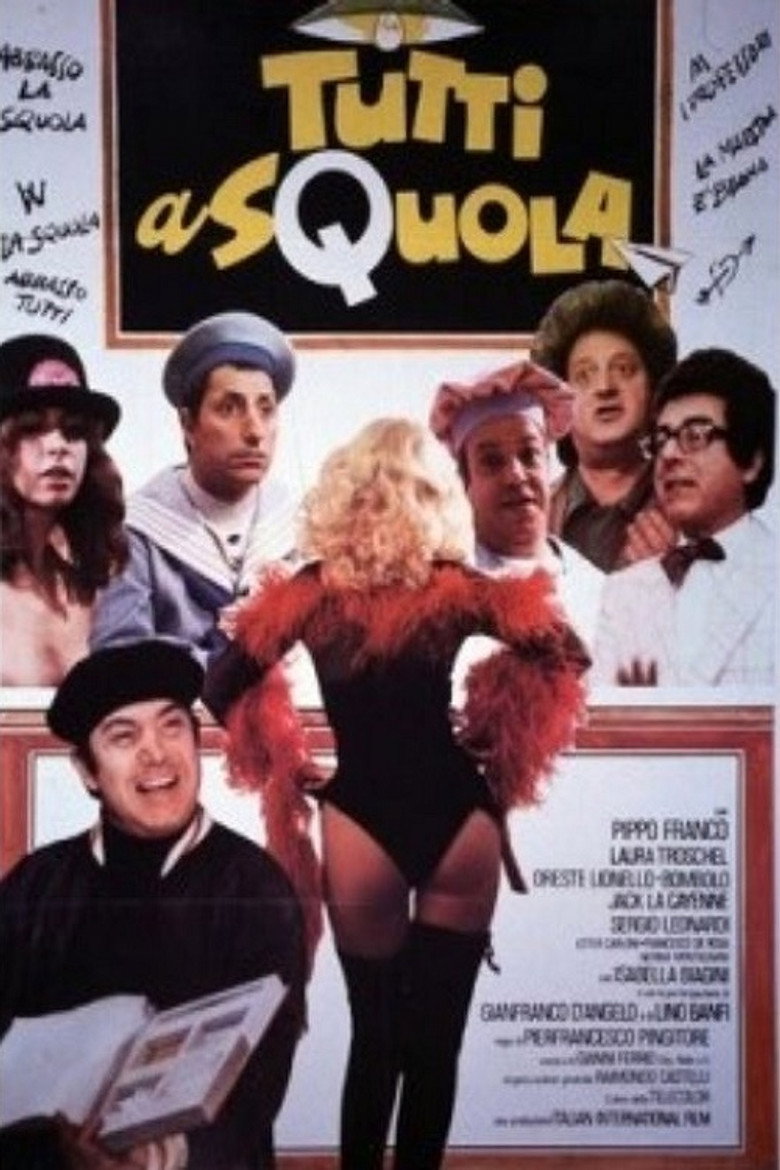
Summer School Teachers
1974
No user ratings available yet
Diversity score: 4.8 out of 10
1979
Director
Pier Francesco Pingitore
Runtime
95 minutes
Average Rating
No ratings yetSynopsis
The upright prof. Filippo Bottini Said Pippo is an "old-fashioned" teacher in a Roman school. He would like a Heart book-style school but clashes with the harsh reality of modern teaching and in particular with the turmoil of the seventies: strikes, occupations, armed students, feminist colleagues. Overwhelmed by events, he will find himself more and more in the maelstrom of the post-1968 protest until he becomes a drug courier. He will be arrested and incarcerated, but thanks to the release on bail provided by his colleague Lalla, with whom he had in the meantime started a relationship, he will be able to redeem himself.
Overall Score
Fair
Category Breakdown
LGBTQ+ Representation
The film lacks explicit depictions of LGBTQ+ characters or non-heteronormative identities. The narrative focus centers on the friction between traditionalism and the feminist movements of the era.
Gender Representation
Female characters, such as the colleague Lalla, act as agents of agency who influence the protagonist's social and legal standing. This subverts traditional patriarchal structures by positioning women as drivers of change.
Racial & Ethnic Diversity
Set in a Roman school during a period of domestic upheaval, the film focuses on class and political identity. There is no indication of significant racial or ethnic diversity within the cast.
Religious & Cultural Diversity
The story explores the deconstruction of traditional Western institutions and the breakdown of authority. It captures the tension between old-fashioned moralities and the radicalized protest culture of the late 1970s.
Disability Representation
There are no identifiable characters portrayed with visible or invisible disabilities in the narrative.
Strengths
Areas for Improvement
AI Analysis
Tutti a scuola serves as a satirical study of the erosion of classical social hierarchies during Italy's 'Years of Lead.' The film succeeds in depicting the shift from traditionalist structures to a more fragmented, identity-driven social landscape. It effectively uses the protagonist's struggle to highlight the era's socio-political volatility. However, the film remains limited by its homogeneous setting and lack of queer or multi-ethnic representation. While it engages deeply with gendered social shifts and institutional instability, it does not explore a wide breadth of intersectional identities.
1974
1975

2002
1973

2020
1971

1960
1975
1973
1990
1979

1985
No reviews yet. Be the first to share your thoughts on this movie!
Use the rating form above to leave a star rating and optional review.