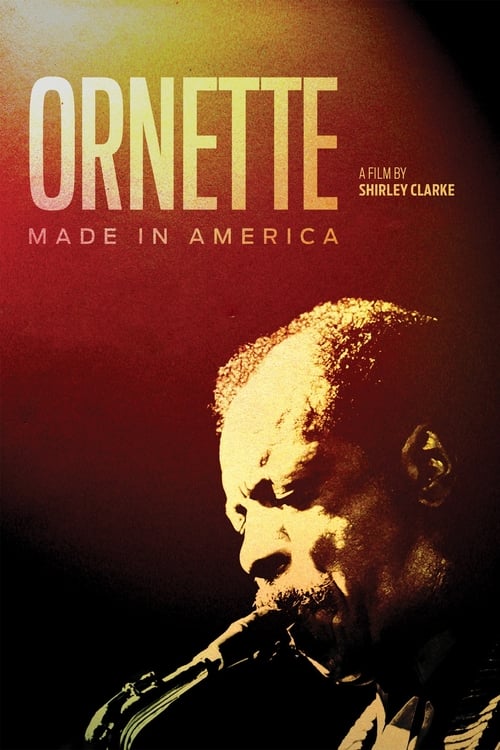
Ornette: Made in America
1986
No user ratings available yet
Representation score: 7.3 out of 10

Representation Score
Good
1963
Director
Ole John, Jens Jørgen Thorsen, Jørgen Leth
Runtime
12 minutes
Average Rating
No ratings yetNew Showbiz Analysis
Stop for Bud is a striking experimental documentary that disrupts traditional cinematic conventions. Its greatest achievement is centering the Black experience through Bud Powell and Dexter Gordon, providing a rare level of racial ability to act for 1963. The film succeeds in portraying an artist as a non-conformist figure who exists outside standard social expectations. This focus on individualistic, fragmented identity allows for a nuanced, if indirect, exploration of mental presence and neurodivergence. However, the film remains limited by its narrow focus on a singular masculine experience. The lack of female presence and explicit queer identity keeps the representation of gender and sexuality within a more traditional, albeit experimental, framework.
Category Breakdown
The film focuses on the solitary experience of Bud Powell, exploring intimacy with the environment through experimental separation of image and sound. While it doesn't explicitly depict queer identities, it offers a non-traditional exploration of relationships and surroundings.
This documentary centers on a male subject and includes male narration. It operates within a male-dominated jazz subculture, offering little visible role for women or challenges to gender hierarchies.
The film highlights a Black jazz icon within a European context, challenging era-specific norms. Dexter Gordon’s narration emphasizes a Black creative perspective, giving Powell significant influence through his music.
The film portrays the artist outside traditional social structures, celebrating non-conformist existence. It critiques the idea of the disciplined citizen, favoring a subjective, individualistic way of life.
The film touches on psychological complexities and mental presence through Powell's 'strange duality.' However, these neurodivergent themes are treated metaphorically rather than through direct advocacy.
Present on Screen
Limited or Absent
Official Synopsis
Stop for Bud is Jørgen Leth's first film and the first in his long collaboration with Ole John. […] they wanted to "blow up cinematic conventions and invent cinematic language from scratch". The jazz pianist Bud Powell moves around Copenhagen -- through King's Garden, along the quay at Kalkbrænderihavnen, across a waste dump. […] Bud is alone, accompanied only by his music. […] Image and sound are two different things -- that's Leth's and John's principle. Dexter Gordon, the narrator, tells stories about Powell's famous left hand. In an obituary for Powell, dated 3 August 1966, Leth wrote: "He quite willingly, or better still, unresistingly, mechanically, let himself be directed. The film attempts to depict his strange duality about his surroundings. His touch on the keys was like he was burning his fingers -- that's what it looked like, and that's how it sounded. But outside his playing, and often right in the middle of it, too, he was simply gone, not there."
1986
1986
1980
1999
1988
2023
1959
1997
No reviews yet. Be the first to share your thoughts on this movie!
Use the rating form above to leave a star rating and optional review.