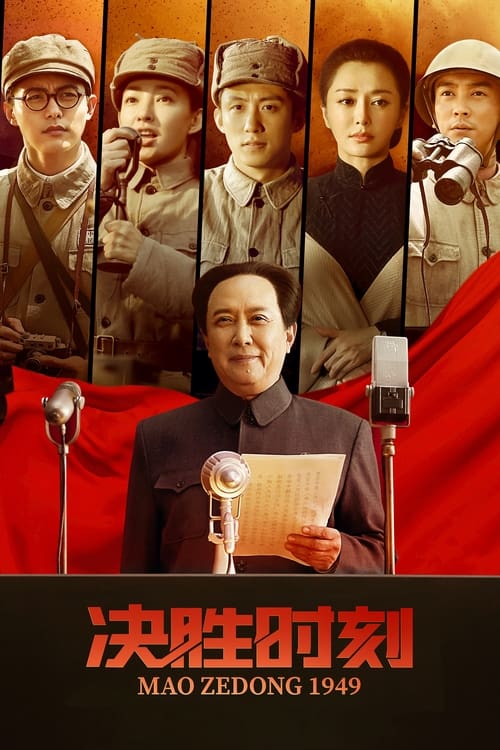
Mao Zedong 1949
2019
No user ratings available yet
Representation score: 3.2 out of 10
Representation Score
Good
1989
Director
Li Qiankuan, Xiao Guiyun
Runtime
163 minutes
Average Rating
No ratings yetNew Showbiz Analysis
The film serves as a monumental historical reconstruction that prioritizes systemic political changes over individual identity politics. It effectively portrays the dismantling of imperialist and capitalist hierarchies, framing the power transition as a necessary social evolution. However, the film lacks depth in representing diverse identities, such as LGBTQ+ individuals and people with disabilities. Instead, it focuses on a standardized image of revolutionary capability. Ultimately, the film explores the formation of national identity. It prioritizes a grand narrative of class and regional unity over individualistic character studies.
Category Breakdown
The film follows traditional social structures of its time and does not depict non-traditional gender identities or same-sex relationships. It focuses on collective revolutionary struggle instead.
Military and political leadership roles are predominantly male, but the film highlights women's involvement in the movement. Female characters are primarily defined by their roles in the collective struggle rather than individual expression.
The cast is ethnically uniform, emphasizing Han Chinese identity. The film redefines 'the people' through a unified national identity that replaces old colonial and feudal systems.
The narrative emphasizes revolutionary morality over Western individualist values. It portrays the founding of the republic as a shift towards a new, secular, and state-oriented social contract.
There are no characters with visible or invisible disabilities. Physical ability is considered a basic requirement for participation in the large-scale military action.
Present on Screen
Limited or Absent
Official Synopsis
In the spring and summer of 1949, the People's Liberation Army launched an offensive under the orders of Mao Zedong and Zhu De, they crossed the Yangtze River and Nanjing was liberated on April 23 which signaled the fall of the KMT regime, Chiang Kai-Shek fled to Taiwan; on October 1, 1949, Mao Zedong standing on the rostrum of Tiananmen, solemnly declared the foundation of the People's Republic of China.
2019
1989
1990

2020
2026
1987
2015
2021
No reviews yet. Be the first to share your thoughts on this movie!
Use the rating form above to leave a star rating and optional review.