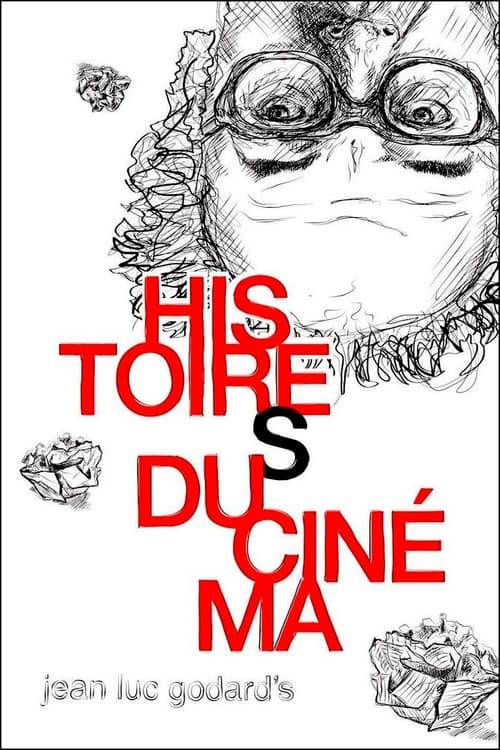
Histoire(s) du Cinéma 2a: Only Cinema
2006
No user ratings available yet
Representation score: 9.3 out of 10
Representation Score
Excellent
1989
Director
Jean-Luc Godard
Runtime
51 minutes
Average Rating
No ratings yetNew Showbiz Analysis
Jean-Luc Godard’s essay film functions as a monumental deconstruction of cinematic history and power. Rather than following a traditional narrative, it uses a montage-based structure to challenge the grand narratives of Western hegemony. The film's strength lies in its systemic critique. It moves beyond simple representation to analyze how the medium itself has been used to reinforce patriarchal, capitalist, and imperialist structures. By deconstructing the 'gaze,' Godard turns the history of film into a tool for historical revisionism. However, the film's abstract, fragmented nature limits its impact on specific character-driven representation. While it excels at intellectual subversion, it lacks the explicit character's ability to drive the story or nuanced depictions of identity found in more traditional narrative cinema.
Category Breakdown
The film lacks central LGBTQ+ characters due to its archival, essayistic structure. However, it critiques how bodies are historically framed by deconstructing straight-centered clichés.
Godard interrogates gender hierarchies by analyzing how the cinematic canon has traditionally objectified women. The film challenges the male gaze, treating female representation as a site of systemic struggle.
The work engages with post-colonial themes by examining how cinema served imperialist expansion. It uses global footage to disrupt the idea of a homogeneous Western history.
This film provides a profound critique of Western institutions and capitalism. It rejects a singular objective truth, favoring a fragmented reality that challenges imperialist hegemony.
There is no intentional focus on disability representation within this montage. Individuals with disabilities appear as part of a broad historical tapestry rather than as central subjects.
Present on Screen
Limited or Absent
Official Synopsis
A very personal look at the history of cinema directed, written and edited by Jean-Luc Godard in his Swiss residence in Rolle for ten years (1988-98); a monumental collage, constructed from film fragments, texts and quotations, photos and paintings, music and sound, and diverse readings; a critical, beautiful and melancholic vision of cinematographic art.
2006
1983
1989
1929
2006

2004
2006
2006
No reviews yet. Be the first to share your thoughts on this movie!
Use the rating form above to leave a star rating and optional review.