
Talking Heads
1980
No user ratings available yet
Representation score: 6.7 out of 10
Representation Score
Good
1961
Not RatedDirector
Jean Rouch, Edgar Morin
Runtime
91 minutes
Average Rating
No ratings yetNew Showbiz Analysis
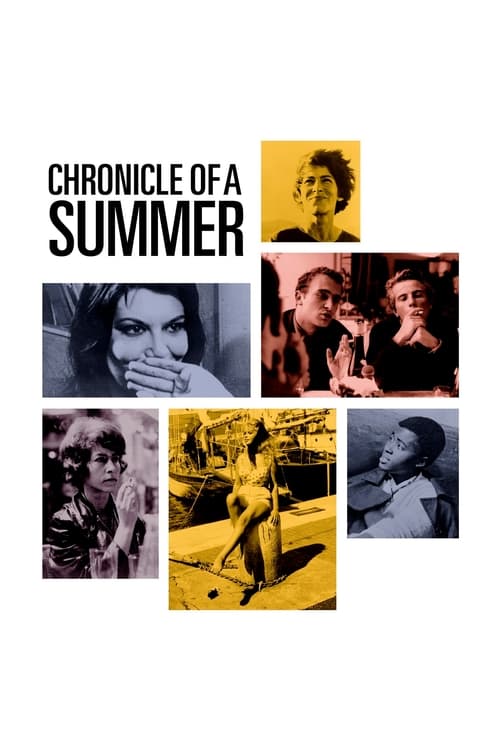
Chronicle of a Summer stands as a landmark of participatory filmmaking. By breaking down the barrier between observer and subject, Rouch and Morin enable a raw, subjective exploration of human experience that was groundbreaking for its time. The film excels in its challenge to social norms, especially regarding gender and sexual autonomy. It offers a platform for individuals to share personal truths, moving away from the rigid, institutionalized perspectives common in mid-century cinema. However, the work is limited by its specific sociological focus. While it captures a broad urban cross-section, it does not deeply engage with issues of racial intersectionality or disability, remaining centered on the Parisian population.
Category Breakdown
The film delves into various forms of human desire and private intimacy, avoiding the social norms of the 1960s to openly discuss sexuality. It challenges the assumption that everyone is straight or cisgender and validates non-traditional expressions of desire.
Women play a significant role in driving the story, moving beyond traditional domestic roles. They express complex desires and opinions on sexuality that were considered transgressive for the time, effectively disrupting traditional gender hierarchies.
The film showcases a range of socioeconomic backgrounds in 1960s Paris. While it focuses on the city’s sociological nuances, it does not deeply explore the intersection of race and class.
The film embraces moral relativism by prioritizing personal truths over objective reality. It challenges the authoritative Western perspective by presenting truth as a fluid concept through self-reflexive filmmaking.
There are no prominent depictions of visible or invisible disabilities that serve as central narrative drivers in this work.
Present on Screen
Limited or Absent
Official Synopsis
Paris, summer 1960. Anthropologist and filmmaker Jean Rouch and sociologist and film critic Edgar Morin wander through the crowded streets asking passersby how they cope with life's misfortunes.
1980
1965
1968

1929

1963

1969

1964
1978
No reviews yet. Be the first to share your thoughts on this movie!
Use the rating form above to leave a star rating and optional review.