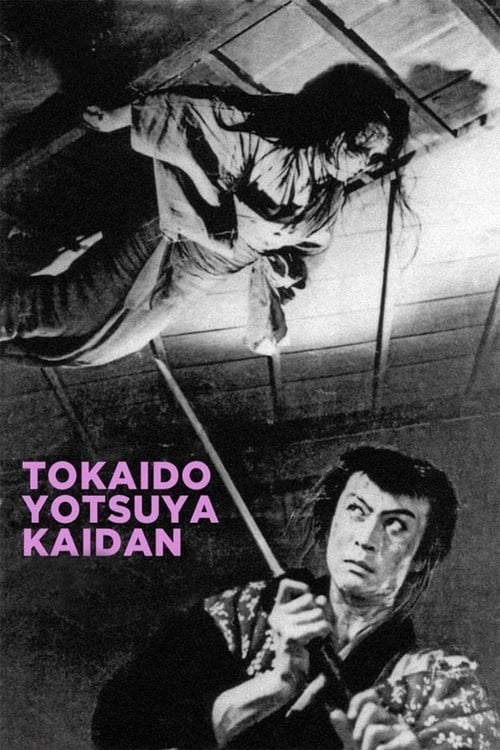
Ghost Story of Yotsuya
1959
No user ratings available yet
Diversity score: 4.4 out of 10
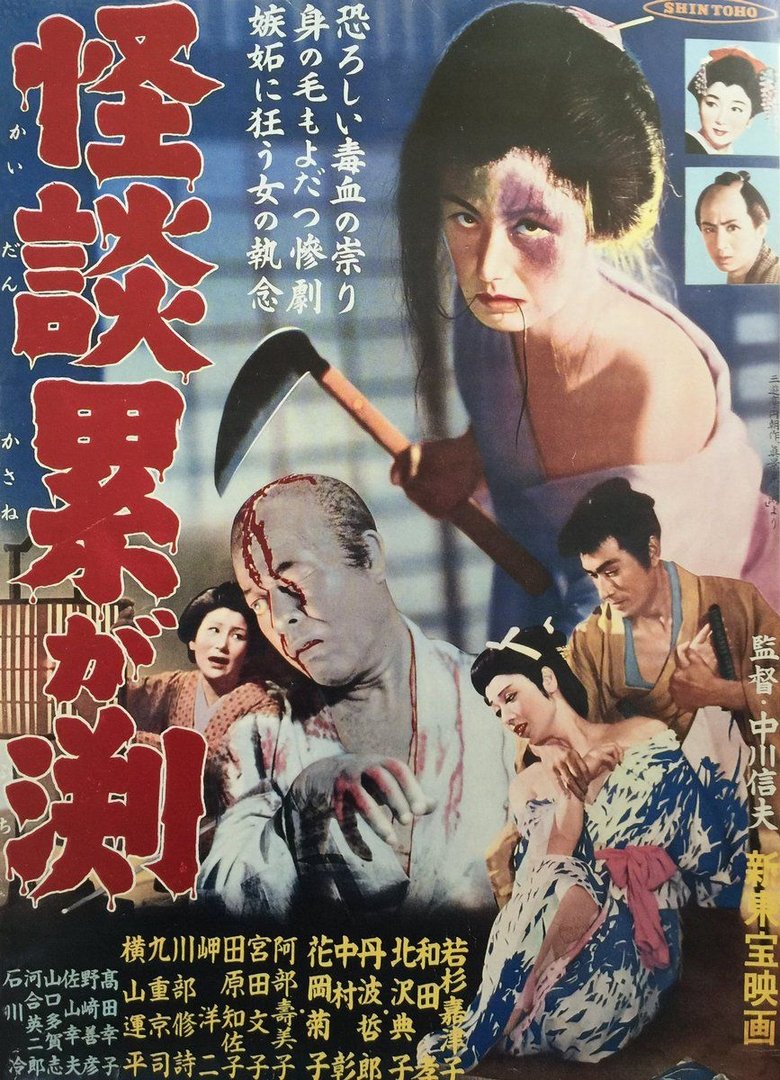
1957
Director
Nobuo Nakagawa
Runtime
66 minutes
Average Rating
No ratings yetSynopsis
A blind masseur visits a samurai to request the return of a loan. The samurai kills him in anger, then has his servant dump the body in the Kasane swamp. However, the ghost of the masseur returns to haunt the samurai, who kills his wife by mistake and then goes to the swamp and drowns himself. 20 years later, the masseur's daughter unknowingly falls in love with the samurai's son who has been brought up to be a servant. After she is horribly disfigured in an accident, he plots to run away with another woman, but the path of their escape lies by the Kasane swamp...
Overall Score
Limited
Category Breakdown
LGBTQ+ Representation
The film lacks depictions of non-heteronormative identities or same-sex intimacy. The story follows a conventional romantic trajectory between the masseur's daughter and the samurai's son.
Gender Representation
Women function primarily as tragic figures or catalysts for male-driven plots. The wife and daughter suffer through violence or disfigurement rather than exercising significant agency within the patriarchal structure.
Racial & Ethnic Diversity
The production is culturally homogeneous, reflecting the standard of 1950s Japanese domestic cinema. It offers deep immersion into local folklore without featuring a multi-ethnic cast.
Religious & Cultural Diversity
The narrative reinforces traditional morality, class hierarchies, and the concept of karma. It serves as a cautionary tale rooted in classical moralism and social order.
Disability Representation
Disability serves as a central plot driver, specifically through blindness and physical disfigurement. However, these characters often lean into the trope of the tragic figure.
Strengths
Areas for Improvement
AI Analysis
The film is a period horror piece that adheres strictly to the social and moral hierarchies of mid-century Japan. It prioritizes classical themes of karma, class distinction, and fatalism over modern subversion. While the story uses disability to drive its central conflicts, these elements function more as plot devices than as explorations of character agency. The narrative structure remains deeply rooted in traditional gender and class roles. Ultimately, the film provides a culturally specific experience that reinforces the established social structures of its era rather than challenging them.
1959

1959
1968
1965
1956

2018
1946

2014
1999
1973
2011
1982
No reviews yet. Be the first to share your thoughts on this movie!
Use the rating form above to leave a star rating and optional review.