
Good News
1947
No user ratings available yet
Representation score: 0.4 out of 10
Representation Score
Minimal
1941
ApprovedDirector
H. C. Potter
Runtime
84 minutes
Average Rating
No ratings yetNew Showbiz Analysis
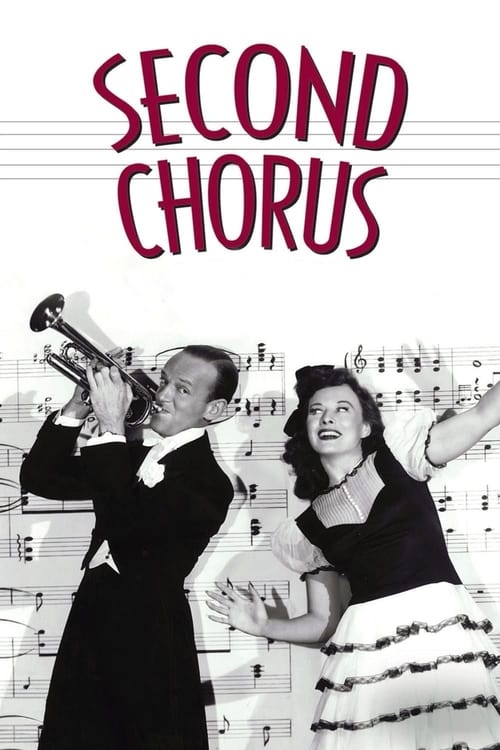
Second Chorus is a typical 1940s musical that upholds the social and cultural norms of its time. It relies heavily on traditional romantic themes and maintains a homogeneous demographic profile. While Ellen Miller, the band manager, has professional influence, the main conflicts revolve around male competition and traditional courtship. The film minimally challenges the established social order, presenting a world defined by conventional Western norms and lacking diverse representation.
Category Breakdown
The film focuses on heterosexual romance and does not include any characters with non-straight or non-cisgender identities.
Ellen Miller, the band manager, has professional influence. However, the plot revolves around male rivalry and traditional romantic relationships.
The cast appears uniform, reflecting the era's predominantly white population. There are no characters of color in positions of power.
The story highlights small-town community and traditional Western social structures. It supports conventional romantic outcomes.
All characters are shown as fully able-bodied. There is no depiction of characters dealing with physical or cognitive differences.
Present on Screen
Limited or Absent
Official Synopsis
Danny O'Neill and Hank Taylor are rival trumpeters with the Perennials, a college band, and both men are still attending college by failing their exams seven years in a row. In the midst of a performance, Danny spies Ellen Miller who ends up being made band manager. Both men compete for her affections while trying to get the other one fired.
1947
1941

1936
1932
1943
1946
1946
1946
No reviews yet. Be the first to share your thoughts on this movie!
Use the rating form above to leave a star rating and optional review.