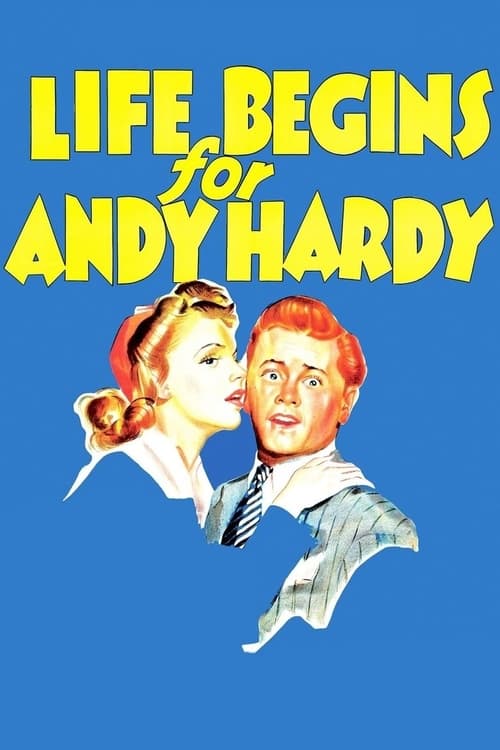
Life Begins for Andy Hardy
1941
No user ratings available yet
Diversity score: 1.7 out of 10

1941
NRDirector
George B. Seitz
Runtime
101 minutes
Average Rating
No ratings yetSynopsis
All set to graduate from high school , Andy Hardy flunks his English exam -- in spite of the fact that Aunt Milly is his teacher, and that the Judge has gone to all the trouble of getting him his very own private secretary.
Overall Score
Minimal
Category Breakdown
LGBTQ+ Representation
The film contains no depictions of non-heteronormative identities or queer subtext. Romantic arcs are strictly centered on traditional heterosexual courtship.
Gender Representation
Female characters occupy professional roles, yet their agency remains tethered to romantic subplots. The narrative emphasizes the authority of male paternal figures over women.
Racial & Ethnic Diversity
The cast and setting are characterized by high homogeneity. It depicts a predominantly white, middle-class American community with no diverse ethnic backgrounds.
Religious & Cultural Diversity
The story reinforces traditional Western institutions and small-town social norms. It celebrates middle-class cohesion and respect for judicial and parental authority.
Disability Representation
There are no prominent characters with visible or invisible disabilities. The narrative does not engage with themes of neurodivergence or physical impairment.
Strengths
Areas for Improvement
AI Analysis
Andy Hardy's Private Secretary serves as a quintessential product of 1941, designed to mirror the prevailing social hierarchies of its era. The film prioritizes domestic harmony and established social roles, offering a stabilized view of mid-century American life. The narrative architecture is built upon the reinforcement of patriarchal authority and racial homogeneity. It functions more as a celebration of traditional family structures than a medium for social critique. Ultimately, the film lacks intersectional representation, focusing instead on the preservation of conventional expectations and middle-class social cohesion.
1941

1938
1937

1946
1936
1951
1937
1941

1926
1931
1938
1951
No reviews yet. Be the first to share your thoughts on this movie!
Use the rating form above to leave a star rating and optional review.