First Love
1939
No user ratings available yet
Representation score: 0.5 out of 10
Representation Score
Minimal
1943
NRDirector
Norman Taurog, Busby Berkeley
Runtime
99 minutes
Average Rating
No ratings yetNew Showbiz Analysis
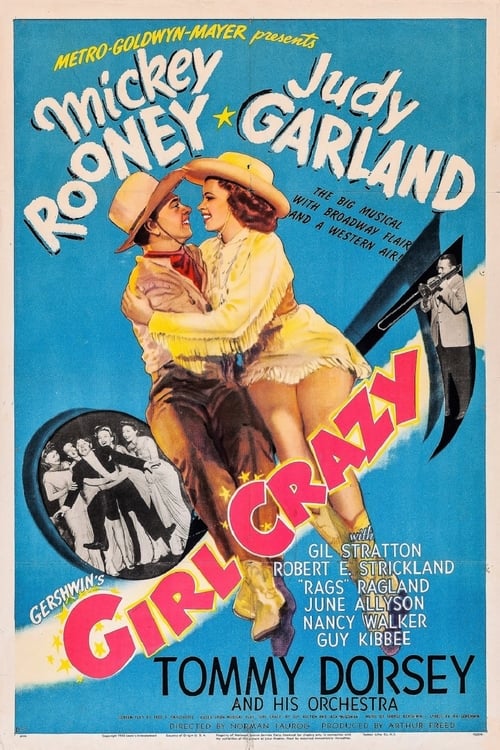
Girl Crazy is a typical product of the Golden Age of Hollywood, designed to reinforce the social norms of 1943. The narrative structure is based on traditional hierarchies of gender, race, and class. The film provides a conventional comedic experience that lacks depth in exploring diverse identities. It prioritizes escapism and established genre conventions over challenging social hierarchies. Ultimately, the work serves as a celebration of the era's status quo, reinforcing the stability of the social order through its focus on upper-class social dynamics and romantic pursuits.
Category Breakdown
The film strictly follows traditional heterosexual relationships and does not include any non-binary gender identities or same-sex relationships.
Ginger Gray shows practical influence over the college's finances, but the story mainly revolves around the male protagonist's actions. Masculinity is depicted through traditional social roles and leisure activities.
The cast is predominantly white, reflecting the systemic lack of racial and ethnic diversity. The story does not explore non-Anglo-Saxon perspectives.
The film upholds traditional Western social structures and mid-century family values through comedic escapism. It does not question or deconstruct these institutions.
No visible or invisible disabilities are shown among the main or supporting characters. The narrative does not address neurodivergence or physical disabilities.
Present on Screen
Limited or Absent
Official Synopsis
Rich kid Danny Churchill has a taste for wine, women and song, but not for higher education. So his father ships him to an all-male college out West where there's not supposed to be a female for miles. But before Danny arrives, he spies a pair of legs extending out from under a stalled roadster. They belong to the Dean's granddaughter, Ginger Gray, who is more interested in keeping the financially strapped college open than falling for Danny's romantic line. At least at first...
1939
1933
1940
1945
1933
1944
1951
1943
No reviews yet. Be the first to share your thoughts on this movie!
Use the rating form above to leave a star rating and optional review.