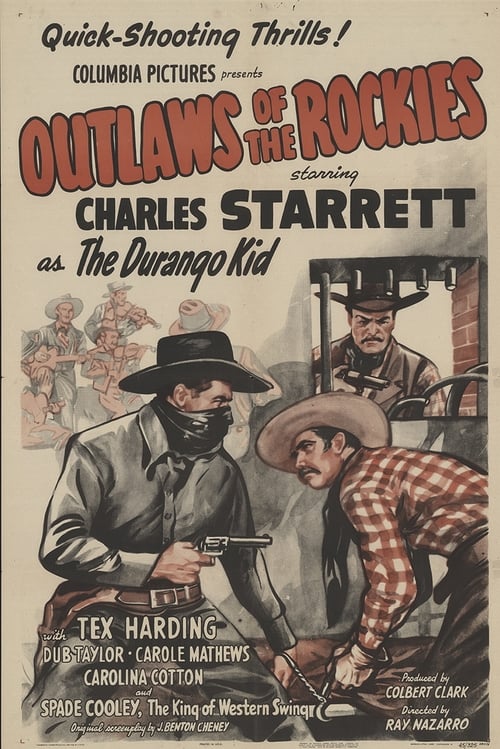
Outlaws of the Rockies
1945
No user ratings available yet
Diversity score: 1.9 out of 10

1951
ApprovedDirector
Ray Nazarro
Runtime
56 minutes
Average Rating
No ratings yetSynopsis
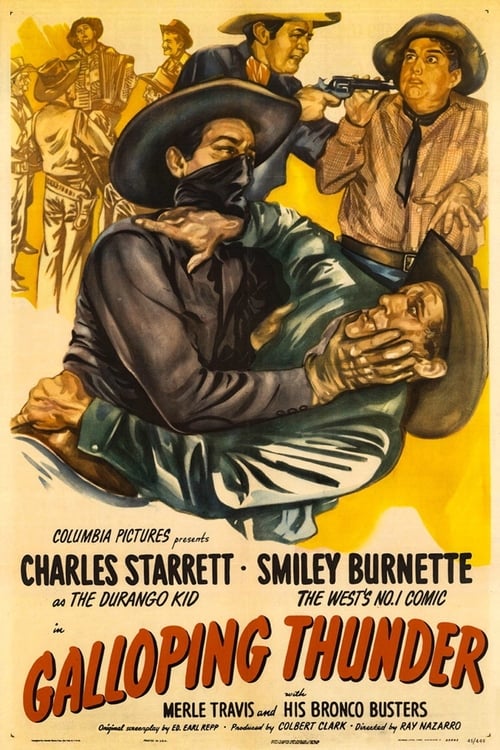
Charles "Durango" Starrett and his pal Smiley Burnette go after smugglers. Our heroes travel incognito across the Mexican border to beard the leader of the gang in his den.
Overall Score
Limited
Category Breakdown
LGBTQ+ Representation
The film reinforces heteronormative structures typical of its era. It focuses on traditional masculine camaraderie without exploring non-cisnormative identities.
Gender Representation
Agency is concentrated in male protagonists like Durango Starrett and Smiley Burnette. Female roles appear limited to passive, traditional supporting positions.
Racial & Ethnic Diversity
The plot involves the Mexican border, but the film likely relies on simplified ethnic caricatures. It emphasizes homogeneous Western heroism over nuanced portrayals.
Religious & Cultural Diversity
The story upholds mid-century American ideals of law and order. It lacks any critique of Western institutions or frontier morality.
Disability Representation
There is no evidence of characters with visible or invisible disabilities within the narrative.
Strengths
Areas for Improvement
AI Analysis
The Kid from Amarillo is a quintessential B-Western that adheres strictly to the genre conventions of 1951. The narrative follows a standard hero-versus-villain trajectory, focusing on law enforcement and the pursuit of smugglers across the Mexican border. Because the film operates within a rigid studio system, it prioritizes traditional masculine archetypes and clear moral binaries. This results in a storytelling style that reinforces established social hierarchies rather than challenging them. Ultimately, the film serves as a reinforcement of mid-century values, offering little in the way of intersectional identity or cultural complexity.
1945
1947
1947
1948
1948

1946
1950

1948
1948
1953
1946
1958
No reviews yet. Be the first to share your thoughts on this movie!
Use the rating form above to leave a star rating and optional review.