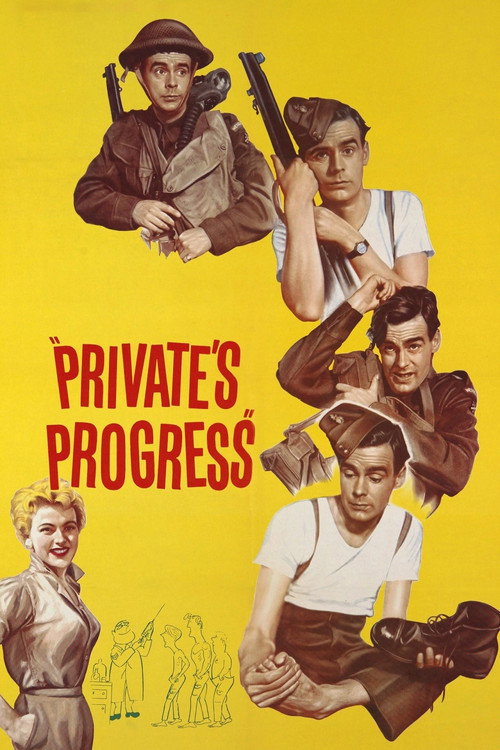
Private's Progress
1956
No user ratings available yet
Representation score: 0.8 out of 10
Representation Score
Minimal
1959
NRDirector
John Boulting
Runtime
105 minutes
Average Rating
No ratings yetNew Showbiz Analysis
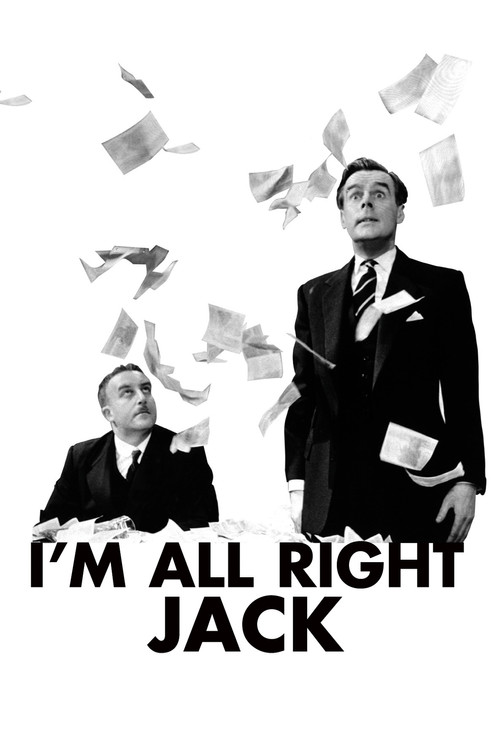
I'm All Right Jack is a biting satire of the mid-century British industrial landscape. It succeeds as a cultural critique by deconstructing the power dynamics between labor unions and corporate management, presenting a world of systemic opportunism. However, the film lacks demographic breadth. It is a product of its era, characterized by a lack of racial, gender, and LGBTQ+ visibility. The narrative is almost entirely centered on a male-dominated, Anglo-Saxon social structure. Ultimately, the film's strength lies in its intellectual subversion of social contracts rather than its representation of diverse identities. It prioritizes a sophisticated critique of institutional corruption over demographic diversity.
Category Breakdown
The film adheres to an assumption that everyone is straight or cisgender. There are no depictions of non-traditional gender identities or same-sex relationships.
The story centers around a male-dominated industrial environment. Female characters play secondary or domestic roles rather than driving the main conflict.
The cast reflects the demographic homogeneity of 1950s Britain. The setting is predominantly Anglo-Saxon, with no significant evidence of racial blending or non-white actors.
The film excels in critiquing Western institutions. It portrays both management and unions as self-serving, challenging traditional concepts of solidarity and institutional virtue.
There is no significant depiction of visible or invisible disabilities. Characters are defined by socioeconomic status and professional roles rather than physical or neurodivergent conditions.
Present on Screen
Limited or Absent
Official Synopsis
Naive Stanley Windrush looks for a career in a family business. Much to his dismay, he finds work at a munitions factory where he has to start from the bottom, while both the management and the labor union use him as a tool in their fight for power.
1956
1963
1949

1963
1939
1976
1955

1949
No reviews yet. Be the first to share your thoughts on this movie!
Use the rating form above to leave a star rating and optional review.