
Earth
1930
No user ratings available yet
Representation score: 4.2 out of 10
Representation Score
Fair
1935
SDirector
Mikhail Dubson
Runtime
80 minutes
Average Rating
No ratings yetNew Showbiz Analysis
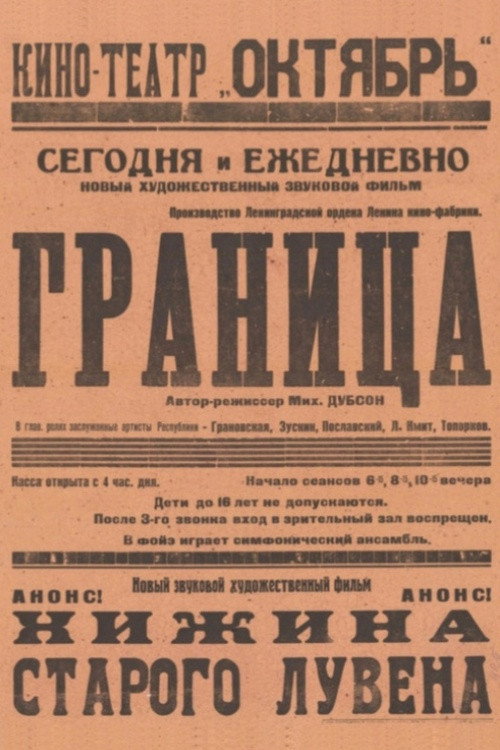
Frontier is a product of early Soviet realism, prioritizing class struggle and the deconstruction of traditional power structures. Its strength lies in its multi-layered approach to ethnic tension, using the conflict between Jewish and Polish communities to drive a narrative of multi-ethnic solidarity against systemic oppression. The film also excels at cultural critique, framing established religious and institutional authorities as tools of the wealthy elite. This anti-institutional stance provides a robust framework for exploring social friction and political mobilization. However, the film remains limited in its scope regarding individual identity. It lacks representation for LGBTQ+ identities and provides no visible engagement with disability, focusing instead on broad socio-political movements.
Category Breakdown
The film does not explicitly depict LGBTQ+ identities or relationships that challenge the assumption that everyone is straight or cisgender. The narrative focuses almost entirely on class-based solidarity and ethnic tensions.
While the plot centers on male-led movements, the film challenges traditional domestic archetypes. It critiques marriage rituals like the 'black crown' ceremony as symbols of social stagnation.
The story features high multi-layered complexity by depicting ethnic strife between Jewish and Polish populations. It highlights multi-ethnic solidarity as a tool against capitalist manipulation.
The film portrays religious and police institutions as corrupt agents of the elite. It prioritizes secular, communist mobilization over traditional religious ceremonies and hierarchies.
There is no evidence regarding the portrayal of characters with physical or neurodivergent disabilities within the narrative.
Present on Screen
Limited or Absent
Official Synopsis
The residents of the village of Staroje Dudino, located four kilometers west of the Soviet border, are completely dependent on the wealthy Novik, whose interests are protected by the local police and clergy. Novik is actively stirring up ethnic strife between the Jewish poor and Polish workers. During the traditional "black crown" ceremony (a wedding ceremony for an old man and an old woman), a group of factory workers led by the communist Haidul, together with the Jewish poor, attack the police and free Boris Bernstein, who had been sentenced to death.
1930

1925

1967
1954
1935
1926
1935
1929
No reviews yet. Be the first to share your thoughts on this movie!
Use the rating form above to leave a star rating and optional review.