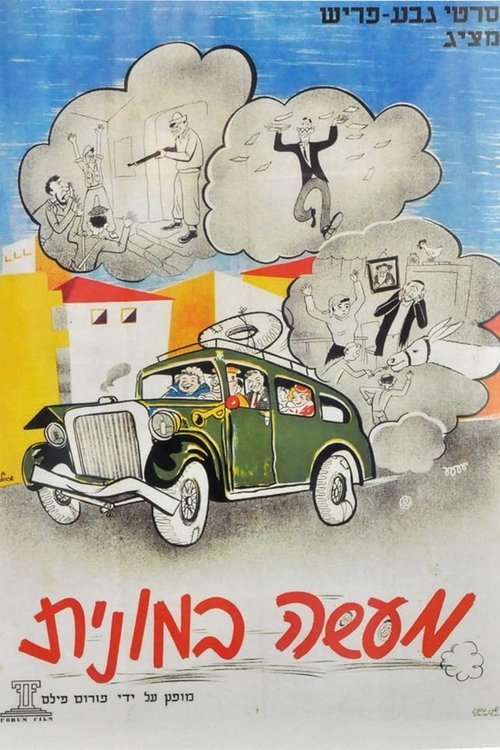
Tel Aviv Taxi
1956
No user ratings available yet
Diversity score: 3.5 out of 10
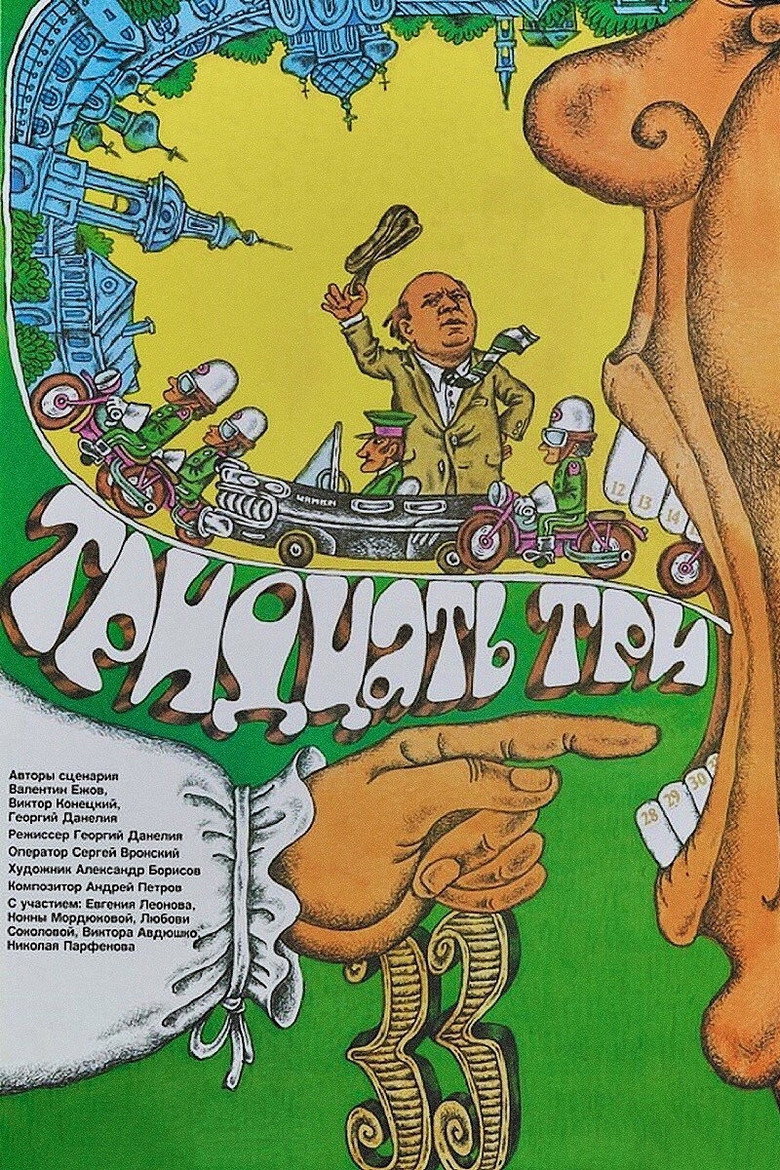
1965
Director
Georgiy Daneliya
Runtime
73 minutes
Average Rating
No ratings yetSynopsis
The dentist of the provincial town of Upper Yamki made an unexpected scientific discovery by finding the thirty-third tooth in the patient’s oral cavity, Ivan Sergeyevich Travkin. Travkin, exhausted from pain, was taken to Moscow. Ivan Sergeyevich first becomes a patient of a madhouse (thanks to envious persons), and then — a hero of a scientific international conference and, finally, a patient of a dentist professor Bruk.
Overall Score
Limited
Category Breakdown
LGBTQ+ Representation
The film contains no LGBTQ+ characters or depictions of same-sex intimacy. The narrative focuses entirely on the protagonist's medical journey and the social reactions to his physical anomaly.
Gender Representation
Women appear within the provincial town and scientific community but occupy traditional 1960s roles. The film presents a balanced but conventional depiction of mid-century social dynamics.
Racial & Ethnic Diversity
Casting is largely homogeneous, reflecting the demographic reality of a Soviet provincial setting. The film operates within a relatively monolithic social landscape without diverse casting.
Religious & Cultural Diversity
The story aligns with secular Soviet values, prioritizing scientific inquiry over religious morality. It frames social conflict through human fallibility rather than systemic institutional oppression.
Disability Representation
The central biological anomaly serves as a comedic catalyst rather than a nuanced exploration of disability. The protagonist's marginalization is handled through absurdist humor.
Strengths
Areas for Improvement
AI Analysis
Thirty-three is a mid-century Soviet lyrical comedy that prioritizes humanism and absurdist humor over identity-driven narratives. The plot centers on a singular biological anomaly—a thirty-third tooth—which drives the character's journey from provincial obscurity to scientific fame. Because the film is a product of its specific historical context, it lacks the structural elements to address intersectional representation. It adheres to the conventional social and demographic structures of the 1960s, offering minimal engagement with marginalized identities or systemic power dynamics.
1956
1982
1977
1909
1988
1957
1958
1965

1967
1983

1951
1964
No reviews yet. Be the first to share your thoughts on this movie!
Use the rating form above to leave a star rating and optional review.