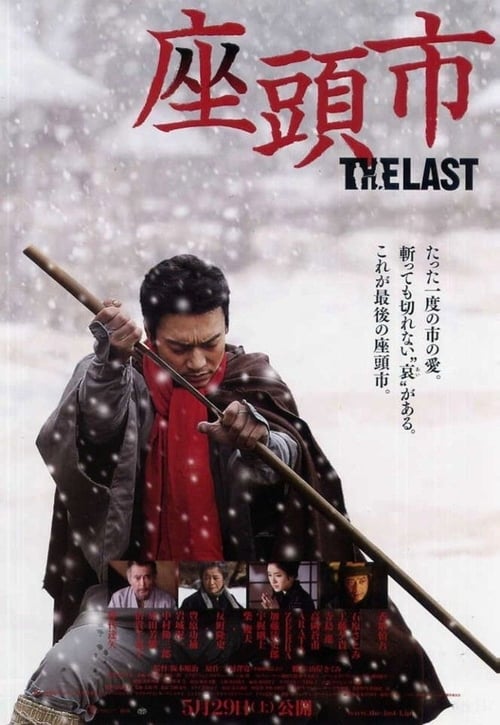
Zatoichi: The Last
2010
No user ratings available yet
Diversity score: 3.9 out of 10
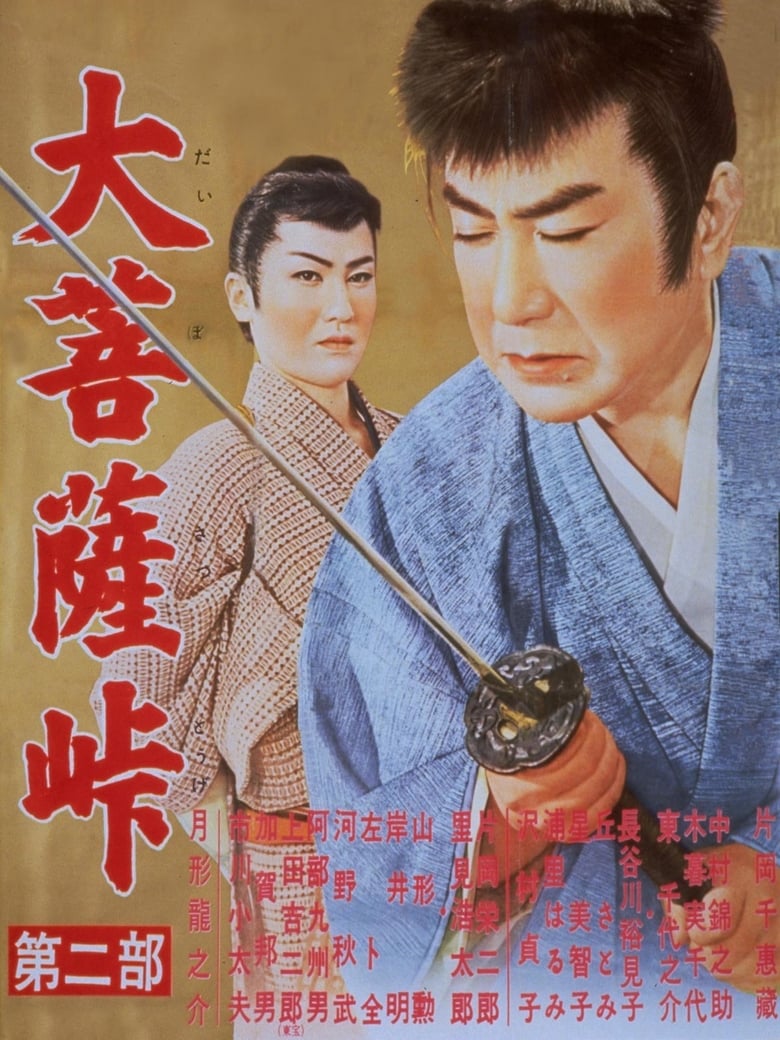
1958
Director
Tomu Uchida
Runtime
105 minutes
Average Rating
No ratings yetSynopsis
This is the second installment of the trilogy based on Japan’s greatest novel “The Great Bodhisattva Pass”, following the life and times of bloodthirsty samurai, Tsukue Ryunosuke. Blinded in an explosion and further injured from a fall, the master swordsman is taken in by Otoyo, a woman who falls in love with him. Under Otoyo’s dedicated care, Ryunosuke’s physical and emotional wounds seem to heal. However, deep inside, the demons that drive him to kill yearn to resurface. Meanwhile he is being pursued by Utsugi Hyoma, a young samurai seeking to avenge his brother’s death at Tsukue’s hands. Hyoma is being aided along the way by the clever thief Shichibei.
Overall Score
Fair
Category Breakdown
LGBTQ+ Representation
The story centers on a traditional romantic bond between Ryunosuke and Otoyo. There is no evidence of non-cisnormative identities or critiques of heteronormativity present in the narrative.
Gender Representation
Otoyo disrupts traditional hierarchies by acting as the protagonist's primary caregiver and emotional stabilizer. Her agency is central, shifting the power dynamic from the warrior to the nurturer.
Racial & Ethnic Diversity
Set in feudal Japan, the cast is ethnically homogeneous. While it lacks modern intersectional diversity, the film remains deeply rooted in its specific Japanese historical context.
Religious & Cultural Diversity
The film deconstructs the heroic samurai archetype through psychological realism. It explores moral ambiguity rather than idealized virtue, though it stays within traditional Edo period structures.
Disability Representation
The protagonist's blindness is a central element of his character evolution. The narrative focuses on his struggle to navigate the world and his dependency on others.
Strengths
Areas for Improvement
AI Analysis
Tomu Uchida’s work offers a sophisticated departure from standard samurai tropes by emphasizing psychological complexity and vulnerability. The film succeeds in humanizing its protagonist through his physical limitations and moral struggles. However, the film operates within the narrow social frameworks of its era. It lacks intersectional diversity and adheres to traditional romantic and cultural structures common to 1950s period pieces. Ultimately, the film's strength lies in its subversion of the 'invincible warrior' through the lens of disability and female agency, even if it remains culturally homogeneous.
2010
1964
1967
1974
1961
1959
1965
1966
1979
1971
1962
1980
No reviews yet. Be the first to share your thoughts on this movie!
Use the rating form above to leave a star rating and optional review.