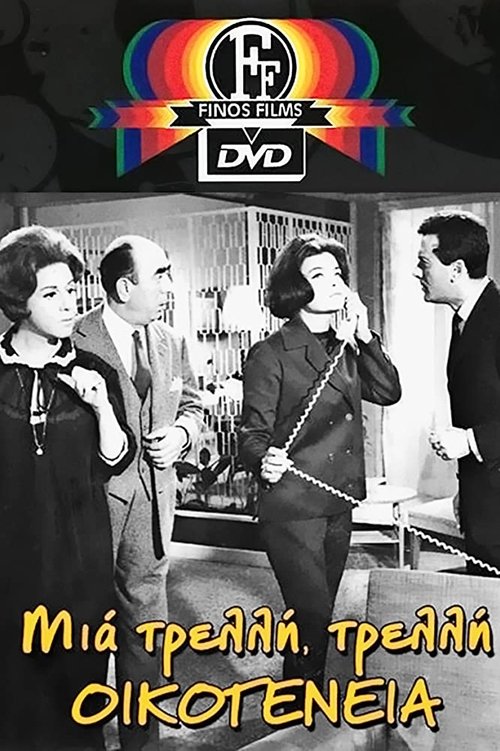
A Crazy Family
1965
No user ratings available yet
Diversity score: 3.1 out of 10

1967
GPDirector
Nanni Loy
Runtime
106 minutes
Average Rating
No ratings yetSynopsis
A man is delighted to hear that his wife is pregnant and he begins to prepare for the wonders of fatherhood. As time progresses along, the family grows larger with each successive child and the father feels his importance in the family has been lessened with all the children. This man's quiet desperation to hold onto his position is an interesting lesson in the family dynamic and how everyone is an important part of the whole.
Overall Score
Limited
Category Breakdown
LGBTQ+ Representation
The film follows a traditional heteronormative path centered on pregnancy and child-rearing. There is no evidence of non-cisnormative identities or critiques of heteronormativity.
Gender Representation
The narrative subverts traditional hierarchies by portraying the father's loss of importance. This comedic lens deconstructs the absolute stability of the male patriarch within a domestic setting.
Racial & Ethnic Diversity
Reflecting the homogeneous social structures of 1967 Italy, the film appears to adhere to standard mid-century European demographic norms. It lacks evidence of multi-ethnic casting.
Religious & Cultural Diversity
The film provides a nuanced look at the family as an institution. It highlights internal friction and shifting social roles rather than presenting the family as an unassailable pillar.
Disability Representation
There is no information available regarding the inclusion of characters with physical or neurodivergent disabilities.
Strengths
Areas for Improvement
AI Analysis
Nanni Loy’s comedy functions as a micro-analysis of domestic power shifts. By focusing on the psychological erosion of patriarchal authority as a family expands, the film moves away from reinforcing traditional masculine leadership. However, the work remains deeply tethered to the conventional social and demographic frameworks of its era. It prioritizes observational humor regarding social roles over a systemic deconstruction of identity politics. Ultimately, the film is a period-specific character study. While it disrupts the trope of the competent patriarch, it lacks intersectional depth or diverse representation.
1965

2016
1972
1967
1963
1958
1951
1963
1955
1982
2003
1979
No reviews yet. Be the first to share your thoughts on this movie!
Use the rating form above to leave a star rating and optional review.