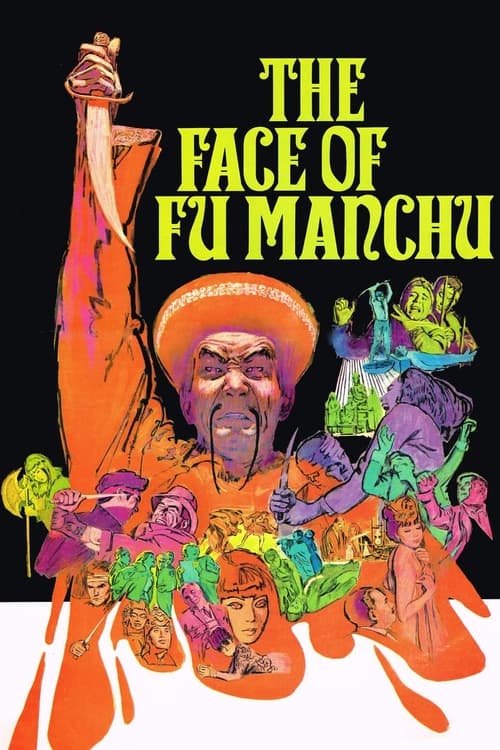
The Face of Fu Manchu
1965
No user ratings available yet
Diversity score: 1.3 out of 10

1955
ApprovedDirector
Ken Hughes
Runtime
84 minutes
Average Rating
No ratings yetSynopsis
A British psychiatrist reads an amnesiac's (Maxwell Reed) brain waves and sees the mind of a killer.
Overall Score
Minimal
Category Breakdown
LGBTQ+ Representation
The film lacks any presence of non-cisnormative identities or same-sex intimacy. It operates strictly within the heteronormative structures typical of 1950s cinema.
Gender Representation
Female characters appear primarily in supporting roles, serving as secondary figures to the male-driven plot. They lack significant agency to disrupt the masculine leadership of the leads.
Racial & Ethnic Diversity
The cast and setting reflect the demographic homogeneity of mid-century London. The narrative remains centered on a predominantly white, Anglo-Saxon framework without characters of color possessing central agency.
Religious & Cultural Diversity
The story functions as a traditional cautionary tale regarding scientific ethics. It reinforces conventional morality and maintains a standard equilibrium rather than deconstructing Western institutions.
Disability Representation
Neurological processes are used as technological plot devices rather than nuanced explorations of neurodivergence. The amnesiac state serves as a thriller catalyst rather than a study of lived experience.
Strengths
Areas for Improvement
AI Analysis
The Brain Machine is a mid-century British thriller that mirrors the social hierarchies of 1955. Its narrative architecture focuses on suspense and moral causality, which results in a lack of diverse representation across most categories. The film relies on traditional gender roles and a homogeneous demographic, offering little room for non-cisnormative identities or racial diversity. It functions as a standard genre piece that reinforces existing social structures. While the plot involves neurological manipulation, it treats cognitive impairment as a mechanical plot point rather than a character-driven exploration of disability. The film ultimately prioritizes genre conventions over social subversion.
1965

1952

1950
1965
1953
1952
1957
1955
1964
1955

1955
1961
No reviews yet. Be the first to share your thoughts on this movie!
Use the rating form above to leave a star rating and optional review.