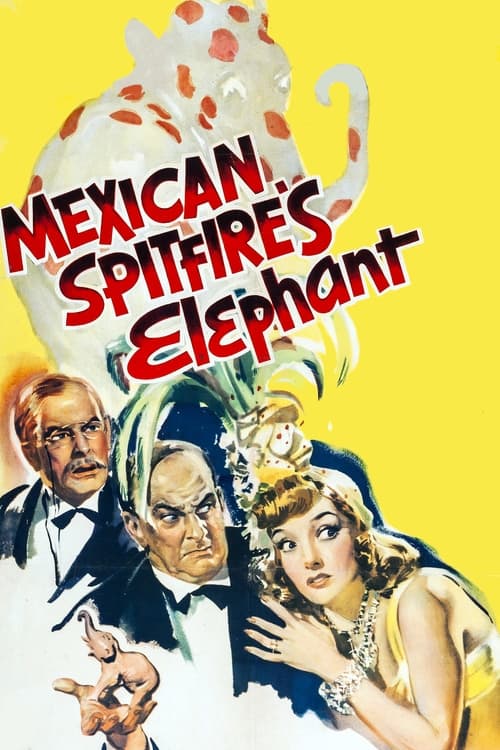
Mexican Spitfire's Elephant
1942
No user ratings available yet
Diversity score: 2.8 out of 10

1941
NRDirector
Leslie Goodwins
Runtime
69 minutes
Average Rating
No ratings yetSynopsis
An advertising executive and his temperamental wife adopt a war orphan who turns out to be a beautiful woman.
Overall Score
Limited
Category Breakdown
LGBTQ+ Representation
The film contains no LGBTQ+ characters or themes. The social and romantic structures remain strictly heteronormative.
Gender Representation
The female lead drives the plot's chaotic energy, yet her agency is framed as domestic disruption. The narrative reinforces traditional hierarchies through slapstick volatility.
Racial & Ethnic Diversity
Lupe Vélez provides notable visibility as a Latina lead. However, the characterization relies on the reductive 'spitfire' trope, prioritizing exaggerated temperament over nuanced depth.
Religious & Cultural Diversity
The story upholds mid-century Western social norms and traditional family structures. It functions to reinforce the status quo of 1940s domestic ideals.
Disability Representation
There are no visible or invisible disabilities portrayed as central to the narrative arc.
Strengths
Areas for Improvement
AI Analysis
The film offers a complex mix of visibility and stereotype. While the casting of Lupe Vélez provides a level of ethnic representation uncommon for 1941 studio comedies, the characterization is tethered to reductive archetypes that limit its impact. Gender dynamics follow standard era-specific patterns, where female agency is channeled into comedic chaos rather than professional or social authority. The film serves as a commercial product that reinforces existing social hierarchies rather than challenging them. Ultimately, the work represents a transitional moment in Hollywood history. It provides ethnic presence but fails to provide the nuance required to move beyond the restrictive frameworks of the period.
1942

1958

1944
1956
1942

1939

1951
1951
1939
1946

1940

1951
No reviews yet. Be the first to share your thoughts on this movie!
Use the rating form above to leave a star rating and optional review.