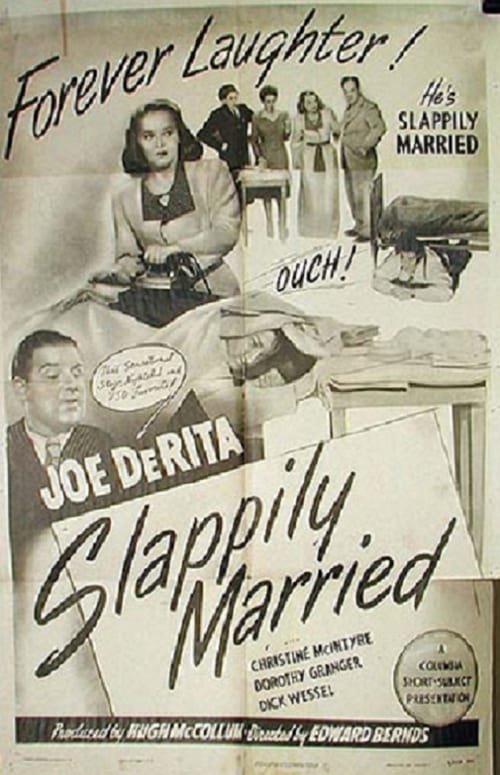
When the Wife's Away
1946
No user ratings available yet
Representation score: 0.5 out of 10
Representation Score
Minimal
1946
ApprovedDirector
Edward Bernds
Runtime
17 minutes
Average Rating
No ratings yetNew Showbiz Analysis
Slappily Married is a conventional mid-century domestic comedy that adheres to the established social hierarchies of its era. The narrative structure focuses on standard marital clichés, particularly the tension caused by perceived infidelity. The film functions as a product of the 1940s studio system, prioritizing traditional interpersonal conflicts over social subversion. It reinforces the assumption that everyone is straight or cisgender and preserves the nuclear family unit. Because the plot relies on established comedic structures, it lacks evidence of diverse casting or challenging gender and racial norms.
Category Breakdown
The film centers on a traditional marriage and does not include any non-straight or non-cisgender identities. There is no critique of the assumption that everyone is straight or cisgender.
The plot uses common mid-century stereotypes about marital suspicion. The wife shows a significant role in driving the story by moving out, but the conflict remains rooted in traditional domestic dynamics.
The film likely reflects the homogeneous casting standards of 1946. There is no indication of casting actors with backgrounds different from the role's traditional expectation or intentional diversity in casting.
The story focuses on the nuclear family unit and appears to reinforce traditional social mores regarding fidelity rather than critiquing Western institutions.
There is no information available regarding the inclusion of characters with visible or invisible disabilities.
Present on Screen
Limited or Absent
Official Synopsis
Joe's wife, who thinks he's been carrying on with another woman, moves out.
1946
1948

1950

1939
1945

1937
1947
1947
No reviews yet. Be the first to share your thoughts on this movie!
Use the rating form above to leave a star rating and optional review.