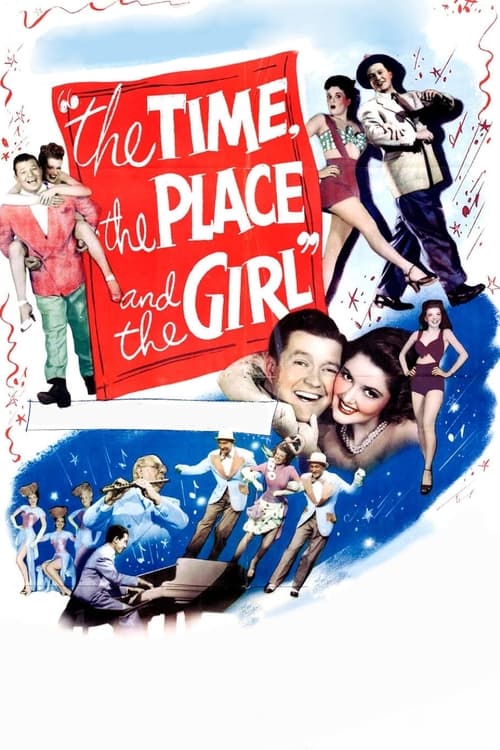
The Time, The Place and The Girl
1946
No user ratings available yet
Diversity score: 2.7 out of 10
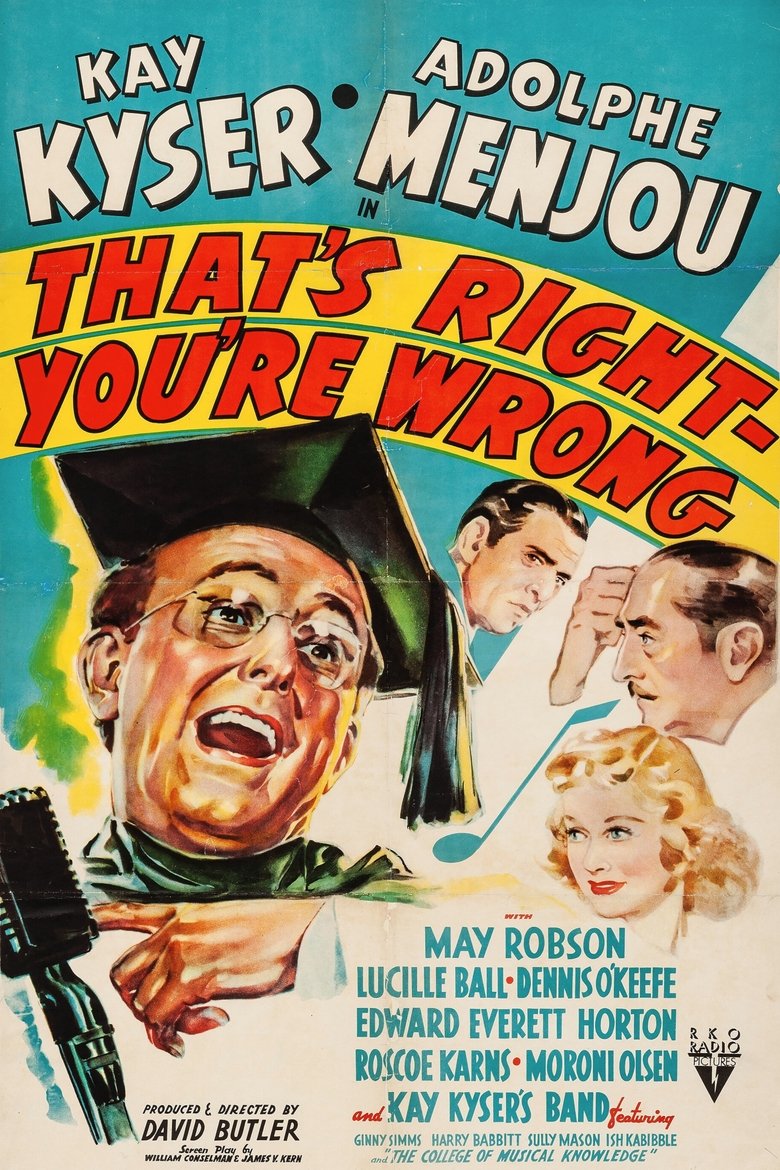
1939
ApprovedDirector
David Butler
Runtime
94 minutes
Average Rating
No ratings yetSynopsis
J. D. Forbes, head of the almost-bankrupt Four Star Studios in Hollywood contacts band leader Kay Kyser, who puts on a radio and-live theatre program called "The Kollege of Musical Knowledge," to appear in films. When manager Chuck Deems gets the studio offer, he and band members Ginny Simms, Sully Mason, Ish Kabiddle, Harry Babbitt and the others are all fired up at the prospect of going to Hollywood and working in the movies, but band-leader Kay is all against it and says his old grandmother has told him to stay in his own back yard, but he relents. Once there, Stacey Delmore, a Four Star associate producer left in charge of the studio while Forbes is out of town, discovers that the screenplay writers have prepared a script that has Kay Kyser playing a glamorous lover in an exotic European setting.
Overall Score
Limited
Category Breakdown
LGBTQ+ Representation
The film offers no evidence of non-heteronormative identities. The narrative appears to operate within the strict heteronormative constraints typical of 1939 musical romances.
Gender Representation
The plot centers on a male band leader navigating professional hurdles. While a female associate producer shows professional agency, the script focuses on traditional romantic archetypes.
Racial & Ethnic Diversity
The cast appears homogeneous, with no mention of non-white characters. The use of an 'exotic European setting' in the script suggests potential reliance on historical cultural tropes.
Religious & Cultural Diversity
The story reinforces traditional values and respect for ancestral wisdom. It prioritizes the stability of the Hollywood studio model over any deconstruction of Western norms.
Disability Representation
There is no indication of characters with visible or invisible disabilities. The narrative contains no mention of neurodivergence or physical impairments.
Strengths
Areas for Improvement
AI Analysis
This musical comedy serves as a quintessential example of late-1930s studio filmmaking, prioritizing escapism and conventional social hierarchies. The narrative follows a standard fish-out-of-water trajectory that reinforces established professional and generational structures. The film lacks meaningful representation across most diversity metrics, adhering to the homogeneous casting and traditional gender roles of the Golden Age. It functions to uphold the status quo rather than challenge systemic norms. Ultimately, the production reflects the era's focus on mainstream appeal through predictable tropes and a narrow cultural perspective.
1946
1933
1943
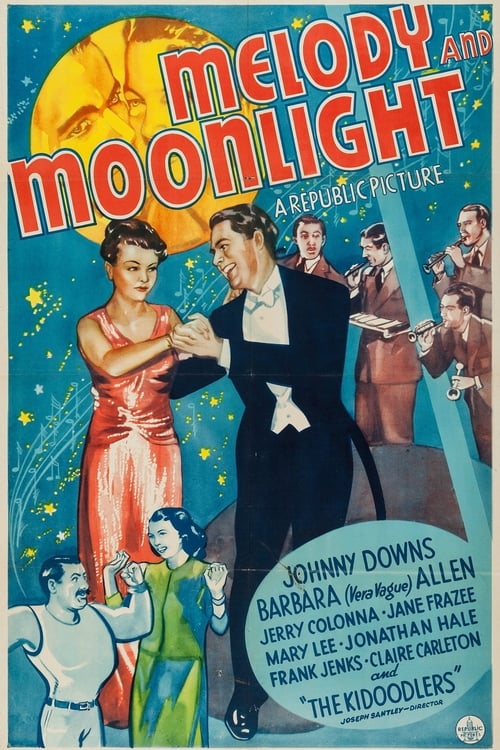
1940
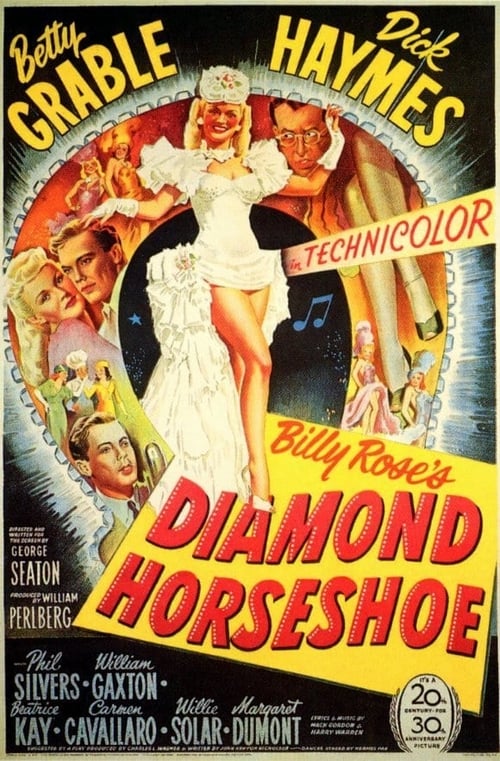
1945

1934
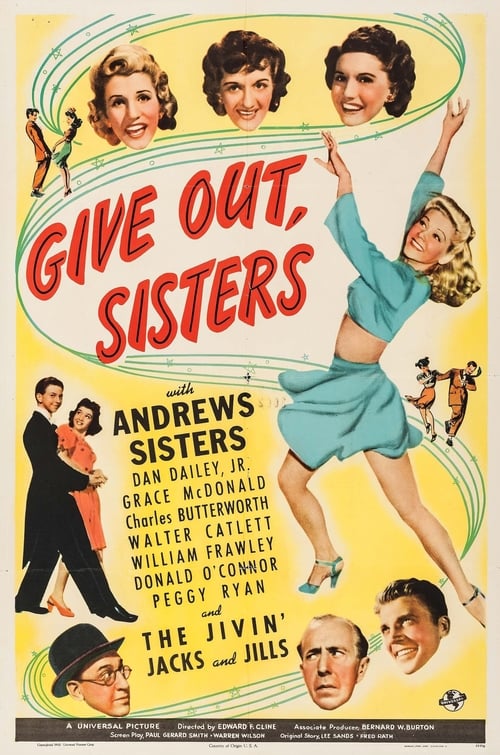
1942

1935

1945
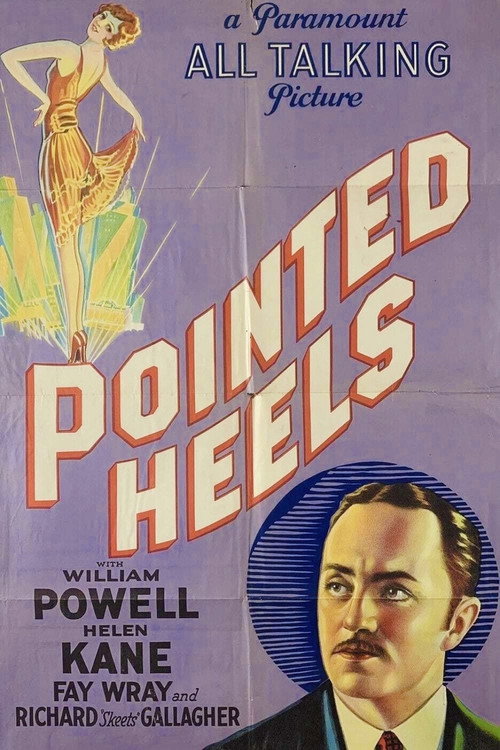
1929
1930
1954
No reviews yet. Be the first to share your thoughts on this movie!
Use the rating form above to leave a star rating and optional review.