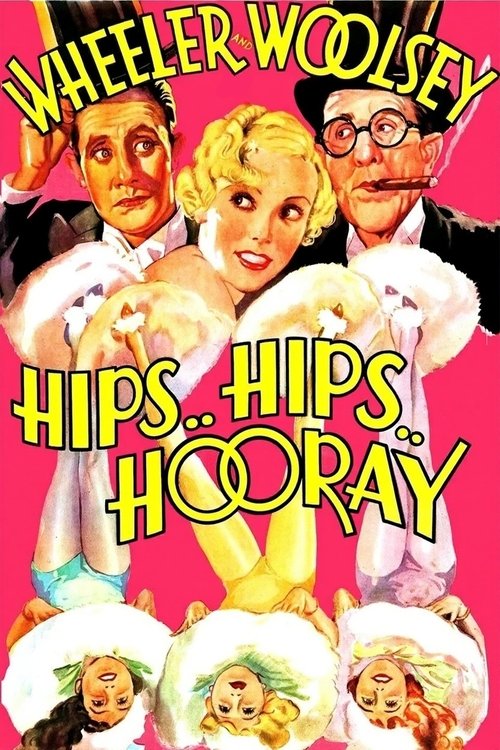
Hips, Hips, Hooray!
1934
No user ratings available yet
Representation score: 2.7 out of 10
Representation Score
Minimal
1933
NRDirector
Mark Sandrich
Runtime
28 minutes
Average Rating
No ratings yetNew Showbiz Analysis
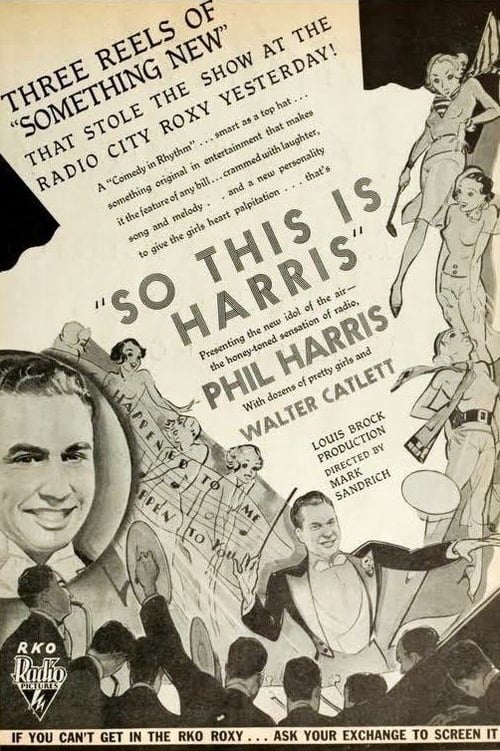
So This Is Harris! is a product of its historical era, functioning as a traditional comedic vehicle. It reinforces the social and gender hierarchies of the 1930s rather than challenging them. The film operates within the established norms of early Hollywood musical comedy. It lacks the intentionality needed to provide meaningful representation of diverse identities or challenge conventional clichés. Ultimately, the work serves as a standard escapist piece, focusing on romantic resolution and traditional social settings like nightclubs and country clubs.
Category Breakdown
The film follows a traditional framework centered around heterosexual relationships. There is no indication of queer subtext or non-cisgender identities, as the comedy revolves around typical romantic misunderstandings.
The narrative centers on male-driven comedic misunderstandings and domestic conflicts. Women do not play a significant role in driving the story or subverting traditional domestic roles.
The film reflects the homogeneous casting standards of the early 1930s. The setting highlights a predominantly white, middle-to-upper-class social environment.
This escapist musical comedy upholds the social stability and capitalist structures of its era. It lacks any critique of Western or secularist values.
There is no visible or hidden disability integration within the character arcs. Characters fill standard social roles without any neurodivergence or physical disabilities.
Present on Screen
Limited or Absent
Official Synopsis
The film is a series of comical musical numbers and skits following Phil Harris around, starting with him performing at the Cocoanut Grove nightclub, which is listened to by Dorothy on the radio whose home-brewing husband Walter hates Harris. The action then moves to the country club where Walter unknowingly encounters Harris while being aggravated by his music. Walter then pretends to be Phil to meet a woman while Harris "entertains" her friend, Dorothy. Preserved by the Academy Film Archive in partnership with Library of Congress Motion Picture, Broadcasting, and Recorded Sound Division, in 2012.
1934
1935

1934
1930
1933
1936
1937
1933
No reviews yet. Be the first to share your thoughts on this movie!
Use the rating form above to leave a star rating and optional review.