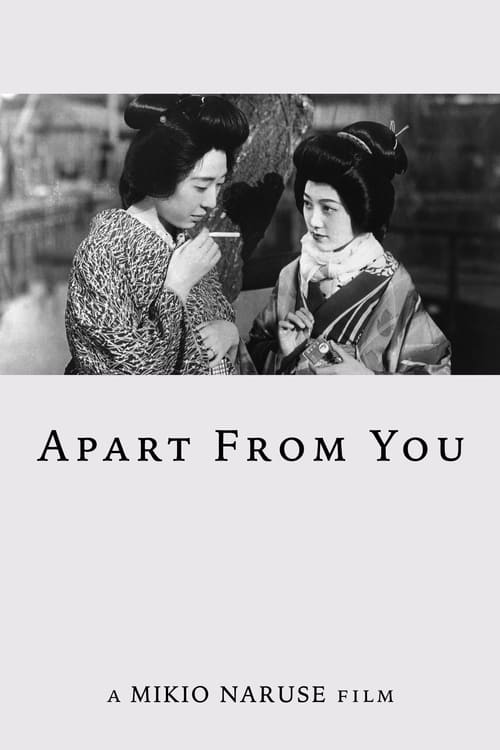
Apart from You
1933
No user ratings available yet
Diversity score: 5.8 out of 10
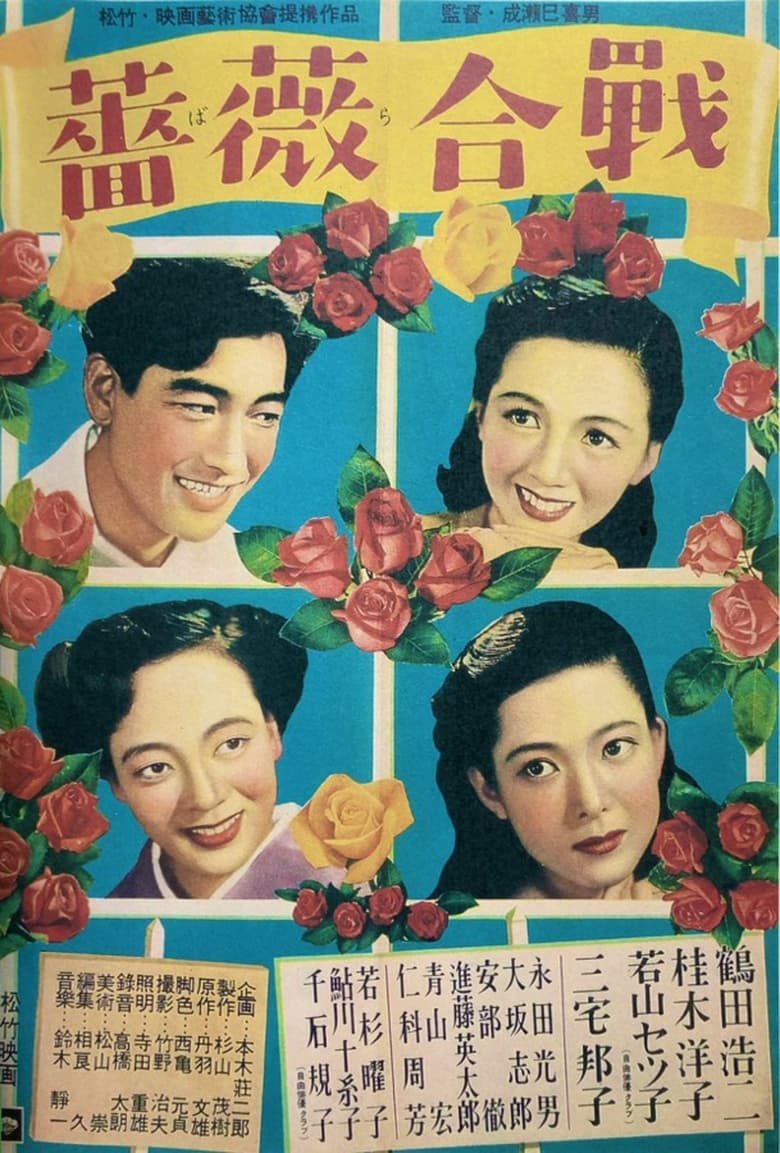
1950
Director
Mikio Naruse
Runtime
98 minutes
Average Rating
No ratings yetSynopsis
Following the death of Mr Masago, his wife Satomi loses the family's cosmetics company to Mr Mogy due to huge amount of withdrawal debt caused by her husband. Mogy blackmails Satomi's sister Hinako into marrying him, so he will not send Masago to jail, and Satomi wrongly understands that Hinako is dating Mogy.
Overall Score
Good
Category Breakdown
LGBTQ+ Representation
The narrative focuses on heterosexual relationships and marital negotiations. There is no explicit evidence of queer identities or non-heteronormative subtext within the story.
Gender Representation
Women serve as the primary drivers of the drama, navigating economic ruin and patriarchal coercion. The film centers on female agency amidst systemic male-driven volatility.
Racial & Ethnic Diversity
The film presents a culturally homogeneous Japanese cast. It provides a deep dive into domestic ethnic identity within its specific post-war historical context.
Religious & Cultural Diversity
The story critiques traditional institutions by portraying marriage and family as sites of conflict and economic instability. It deconstructs the idealized sanctity of the family unit.
Disability Representation
There is no mention of characters with visible or invisible disabilities in the provided narrative details.
Strengths
Areas for Improvement
AI Analysis
Mikio Naruse’s direction provides a sophisticated look at the economic vulnerabilities and social pressures faced by women in 1950s Japan. The film excels by placing female protagonists at the center of a high-stakes struggle against patriarchal authority and corporate corruption. While the film lacks modern intersectional markers like multi-ethnic casting or explicit LGBTQ+ representation, it offers significant progressive value. It replaces idealized domesticity with a gritty, psychological realism that interrogates the transactional nature of marriage and debt. Ultimately, the work functions as a powerful study of gendered power dynamics, using the domestic sphere to challenge traditional social hierarchies.
1933

1951

1935
1962

1944
1956

1960
1954

1956
1953

1937

1962
No reviews yet. Be the first to share your thoughts on this movie!
Use the rating form above to leave a star rating and optional review.