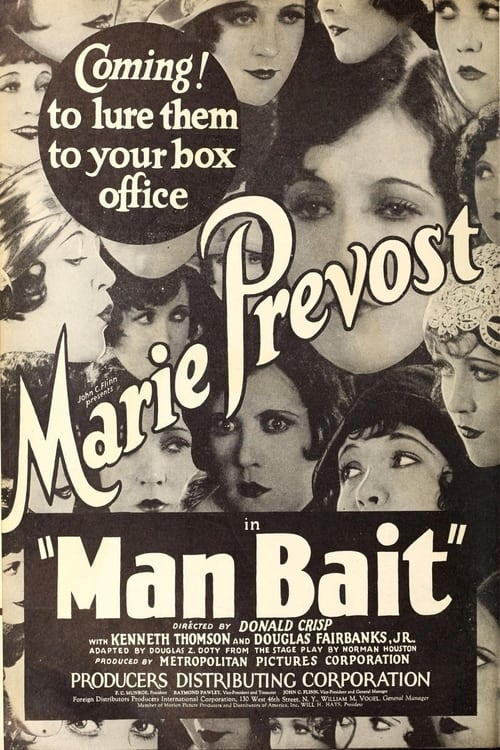
Man Bait
1927
No user ratings available yet
Representation score: 3.4 out of 10
No Poster Available
Representation Score
Minimal
1926
PassedDirector
Frank R. Strayer
Runtime
69 minutes
Average Rating
No ratings yetNew Showbiz Analysis
Sweet Rosie O'Grady is a product of its time, using a classic class-clash theme to connect working-class Irish immigrants with high society. While it provides visibility to a specific ethnic identity, the narrative upholds established social hierarchies. The film centers on a female protagonist, yet her ability to act is channeled through romantic pursuits. The plot’s resolution reinforces contemporary social norms rather than challenging them. Ultimately, the film serves as a traditional romantic comedy that prioritizes social stability and conventional courtship over any disruption of the status quo.
Category Breakdown
The film follows strict conventions that assume everyone is straight or cisgender. There is no representation of same-sex relationships or non-traditional gender identities.
Rosie O'Grady exhibits strength and resilience, but her journey is tied to marriage and male approval. her ability to act is limited to traditional roles.
The film highlights the Irish-American experience in New York, but the cast remains predominantly of the same ethnicity.
The story operates within a traditional Western framework, emphasizing social structures and the pursuit of social mobility through marriage.
There are no visible or invisible disabilities portrayed as central to the character arcs or plot development.
Present on Screen
Limited or Absent
Official Synopsis
A baby girl is left at the door of Brady, an Irish-policeman in New York City. He and his friends bid for her, and she is won by Uncle Ben Shapiro, a pawnbroker, who raises her to young womanhood, and is known as Sweet Rosie O'Grady. One day she goes to the rescue of Victor MacQuade, a young man from the high society set, who has been attacked by some east-side gang kids. The next day Victor, dressed as the family chauffeur, calls for her to go on on a ride. He goes home to change clothes while she peeks through the door at a charity costume-bazaar, and is swept inside by some late-arriving guests. She wins first prize for best costume, although she is dressed in the best she has. She flees angry and mortified. Since he has a larger house, she moves to Brady's home, one of her other foster-parents. Victor, who has fallen in love with Rosie, goes to Uncle Ben's shop and asks his permission to marry Rosie.
1927
1928

1927

1924
1928
1927

1929

1921
No reviews yet. Be the first to share your thoughts on this movie!
Use the rating form above to leave a star rating and optional review.