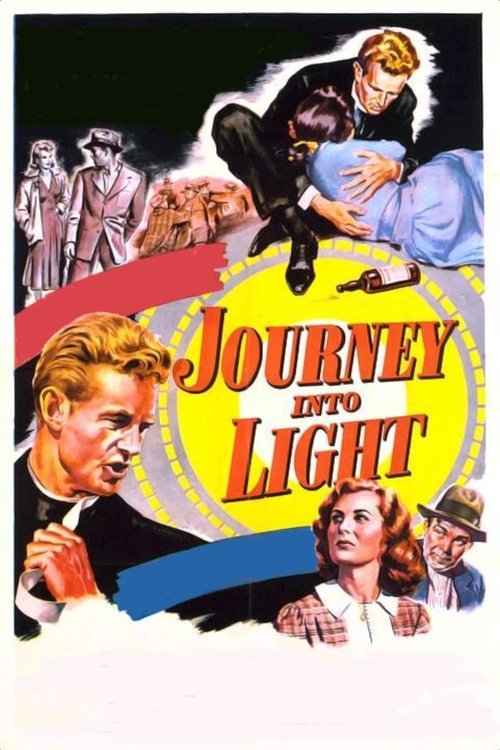
Journey Into Light
1951
No user ratings available yet
Diversity score: 2.7 out of 10

1954
Director
Léo Joannon
Runtime
107 minutes
Average Rating
No ratings yetSynopsis
Pierre Fresnay plays the title character in Le Defroque (The Defrocked One). Cast out by his church, former priest Maurice (Fresnay) delights in mocking the traditions and credos of Catholicism. Even so, young Gerard (Pierre Trabaud) becomes convinced that Maurice has never truly lost his calling. Becoming a priest himself, Gerard devotes his life to bringing Maurice back into the fold. Things don't turn out quite as Gerard hopes, however; he has not reckoned with the possibility that Maurice may have been driven into insanity by his raging self-hatred.
Overall Score
Limited
Category Breakdown
LGBTQ+ Representation
The film centers on a spiritual and psychological crisis. There is no presence of non-cisnormative identities or same-sex intimacy.
Gender Representation
The story focuses on a male-dominated hierarchy between two men. Women lack significant agency or intellectual dominance in this narrative.
Racial & Ethnic Diversity
The production reflects the demographic homogeneity of mid-century France. The cast adheres to standard Western European compositions of the 1950s.
Religious & Cultural Diversity
The film explores religious conflict through a protagonist who mocks Catholic traditions. It follows a conventional moral framework rather than a systemic critique.
Disability Representation
The plot explores mental instability and potential insanity. While the depiction risks using the tragic figure trope, it offers some psychological depth.
Strengths
Areas for Improvement
AI Analysis
The film is a traditional mid-century drama that operates within the established social and cultural hierarchies of its era. It focuses heavily on the internal psychological struggles of its male protagonists within a religious context. While the film provides character depth regarding mental health, it lacks intentionality in disrupting conventional social narratives. The representation is largely limited to the demographic norms of 1950s France. Ultimately, the work functions as a character study of religious disillusionment rather than a vehicle for intersectional or diverse representation.
1951
1938
1970
1951
1961

1954
1984

1956
1951
1949
1958
1951
No reviews yet. Be the first to share your thoughts on this movie!
Use the rating form above to leave a star rating and optional review.