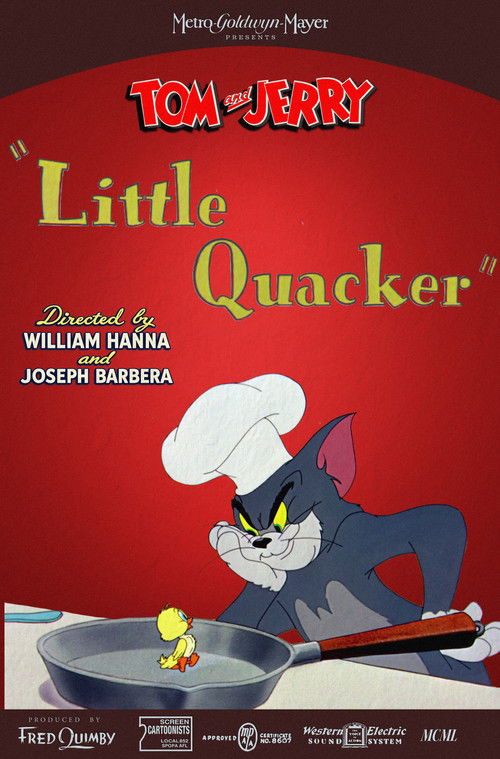
Little Quacker
1950
No user ratings available yet
Diversity score: 1.6 out of 10
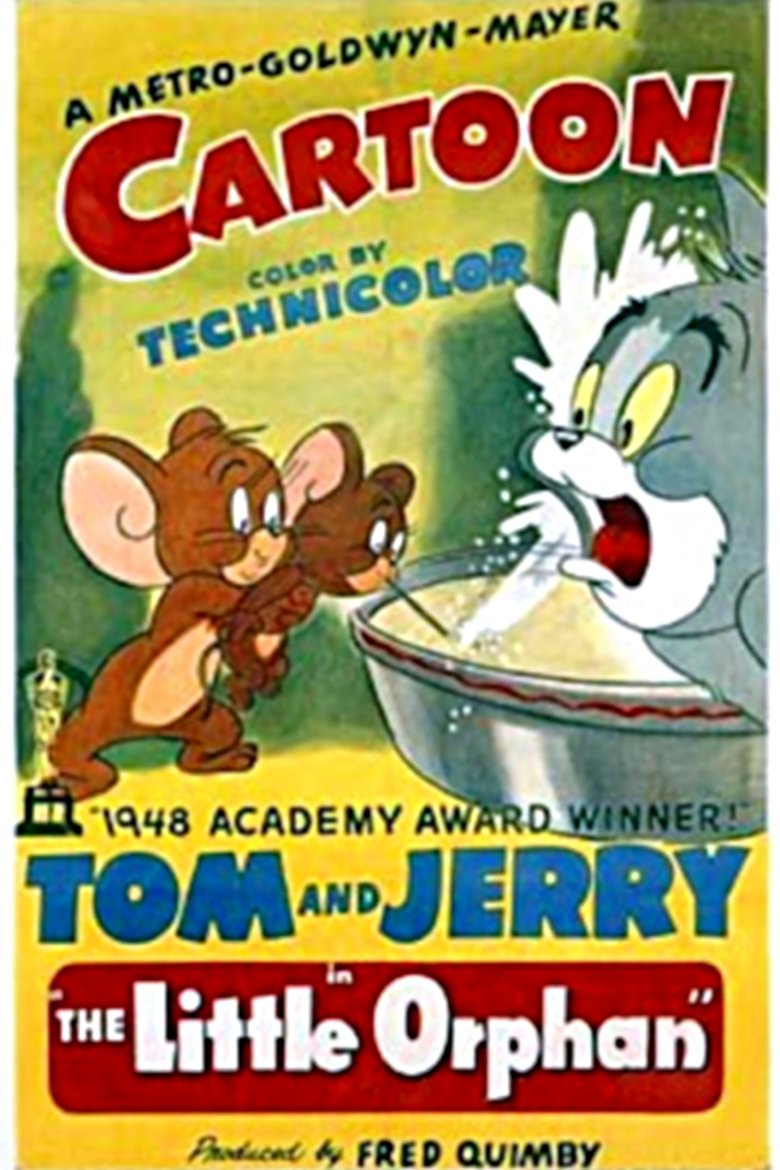
1949
ApprovedDirector
William Hanna, Joseph Barbera
Runtime
8 minutes
Average Rating
No ratings yetSynopsis
The Bide A Wee Mouse Home has sent the orphan mouse Nibbles to spend Thanksgiving with Jerry. Unfortunately, Nibbles is always hungry.
Overall Score
Limited
Category Breakdown
LGBTQ+ Representation
The film lacks any evidence of LGBTQ+ characters or non-heteronormative identities. The narrative centers on a traditional orphan dynamic that provides no framework for queer identity exploration.
Gender Representation
Gender roles are largely absent, as the story focuses on anthropomorphic mice. There is no evidence of women demonstrating intellect or subverting traditional masculine leadership roles.
Racial & Ethnic Diversity
The use of animal characters provides a neutral ground, but the production aligns with mid-century standards. There is no evidence of diverse ethnic metaphors or race-bent casting.
Religious & Cultural Diversity
The plot utilizes the Thanksgiving holiday as a cornerstone of Western cultural expression. It emphasizes traditional themes of hospitality and hunger within conventional social frameworks.
Disability Representation
Nibbles' status as an orphan functions as a social vulnerability rather than a physical disability. His hunger serves as a comedic catalyst rather than a nuanced portrayal of disability.
Strengths
Areas for Improvement
AI Analysis
The Little Orphan is a quintessential product of 1949 animation, prioritizing slapstick comedy over social complexity. The narrative relies on established tropes of hospitality and hunger to drive its situational humor. Because the film utilizes anthropomorphic mice, it avoids direct human social hierarchies but fails to introduce any progressive or intersectional identities. The characters exist within the homogeneous standards of mid-century American animation. Ultimately, the short adheres to the conventional storytelling of its era. It offers little in the way of narrative disruption or the representation of marginalized groups.
1950
1945
1955
1957

1944
1954
1952
1954
1944
1953
1954
1951
No reviews yet. Be the first to share your thoughts on this movie!
Use the rating form above to leave a star rating and optional review.