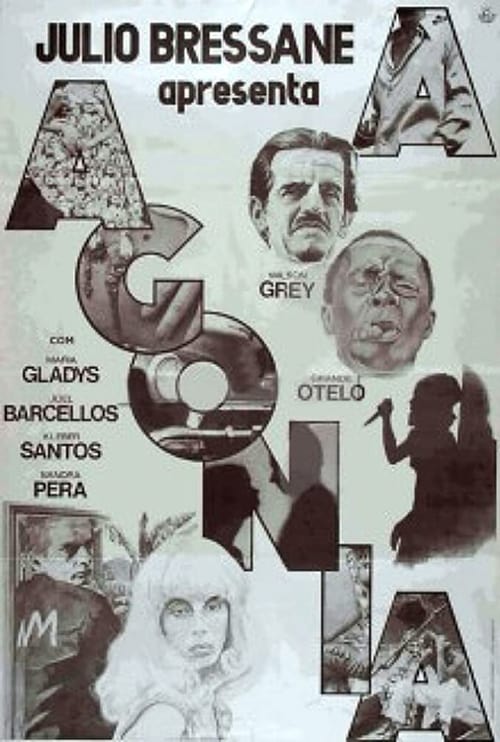
The Agony
1976
No user ratings available yet
Diversity score: 6.2 out of 10
1969
Director
Júlio Bressane
Runtime
63 minutes
Average Rating
No ratings yetSynopsis
Santamaria and Urtigo are two bandits on the run, one is white, the other black. Santamaria is a mystical visionary and believes in the imminent coming of a purifying angel. Urtiga, his inseparable companion, is a simple-minded and ingenious man who follows Santamaria around and participates in the crimes he commits. The two bandits take over a house after kidnapping its owner and his girlfriend.
Overall Score
Good
Category Breakdown
LGBTQ+ Representation
The narrative lacks explicit depictions of LGBTQ+ identities or non-heteronormative relationships. The focus remains strictly on the central duo and their captives.
Gender Representation
The story centers on male protagonists and their criminal agency. The female character appears primarily as a passive victim of kidnapping.
Racial & Ethnic Diversity
The film disrupts traditional hierarchies by pairing a white protagonist with an ingenious Black companion. This dynamic moves away from reductive stereotypes.
Religious & Cultural Diversity
The film critiques state institutions through its outlaw protagonists. Santamaria’s mystical visions introduce a framework of subjective, non-traditional spirituality.
Disability Representation
There is no mention of characters with visible or invisible disabilities within the narrative.
Strengths
Areas for Improvement
AI Analysis
Júlio Bressane’s work is rooted in the radical Cinema Marginal movement, which seeks to disrupt social and cinematic hierarchies. This intent is most visible in the film's racial dynamics, where the partnership between Santamaria and Urtigo challenges mid-century racial tropes by granting the Black character significant agency and ingenuity. However, the film struggles with gendered agency, as the female presence is relegated to the role of a kidnapped victim. The lack of explicit LGBTQ+ themes or disability representation further limits the scope of its social subversion. Ultimately, the film succeeds as a critique of institutional morality and traditional social structures, using its outlaws to bypass established state-sanctioned truths.
1976
1967
1964
1967

1967

1970
1968
1964
1959
1963
1967
1992
No reviews yet. Be the first to share your thoughts on this movie!
Use the rating form above to leave a star rating and optional review.